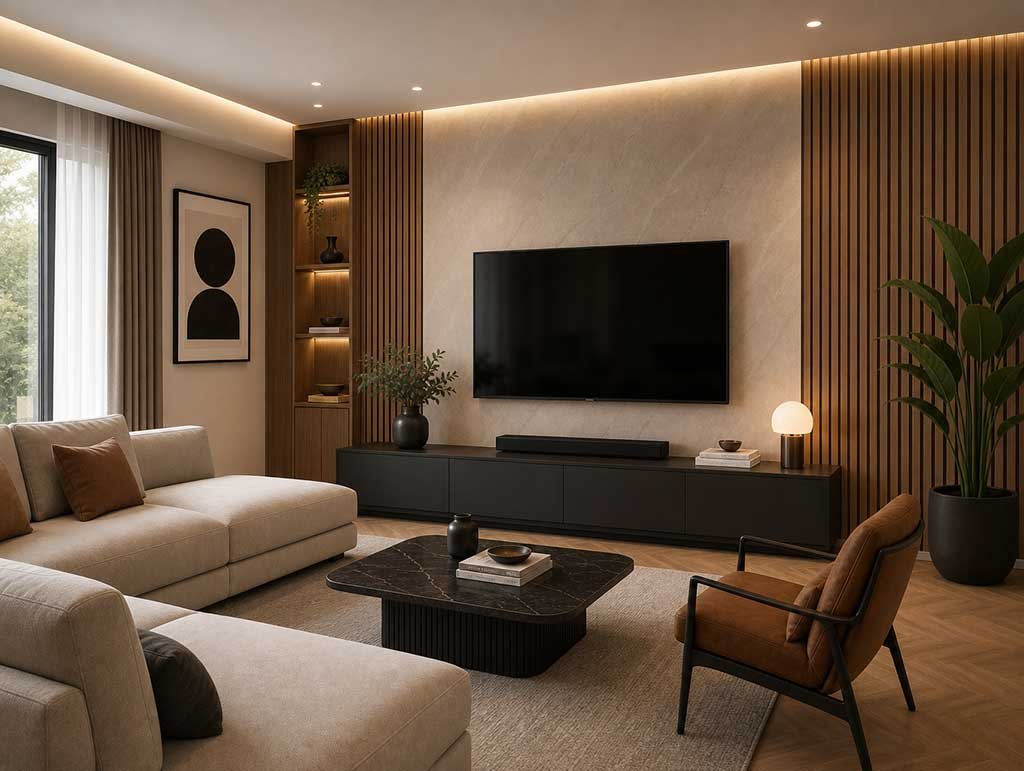
Are Acoustic Panels Really Effective? A Guide to Choosing Acoustic Materials
Learn how acoustic panels absorb sound, how NRC and RT60 work, and how WPC slat wall panels with PET backing improve indoor acoustics.
In everyday life, many environments are affected by unwanted noise or require effective noise control. As a result, acoustic materials are commonly considered when designing and renovating offices, meeting rooms, restaurants, classrooms, recording studios, home theaters, and other spaces to address issues such as echoes, reverberation, and excessive noise.
Table of Contents
So, are acoustic panels really effective?
The answer is yes. Acoustic panels are primarily designed to control sound reflections and reverberation within a room rather than directly preventing sound from traveling from one room to another.
By absorbing part of the incident sound energy, acoustic panels reduce sound reflections from hard surfaces such as walls and ceilings. This can help reduce the reverberation time (RT60), improve speech intelligibility, and create a more comfortable acoustic environment.
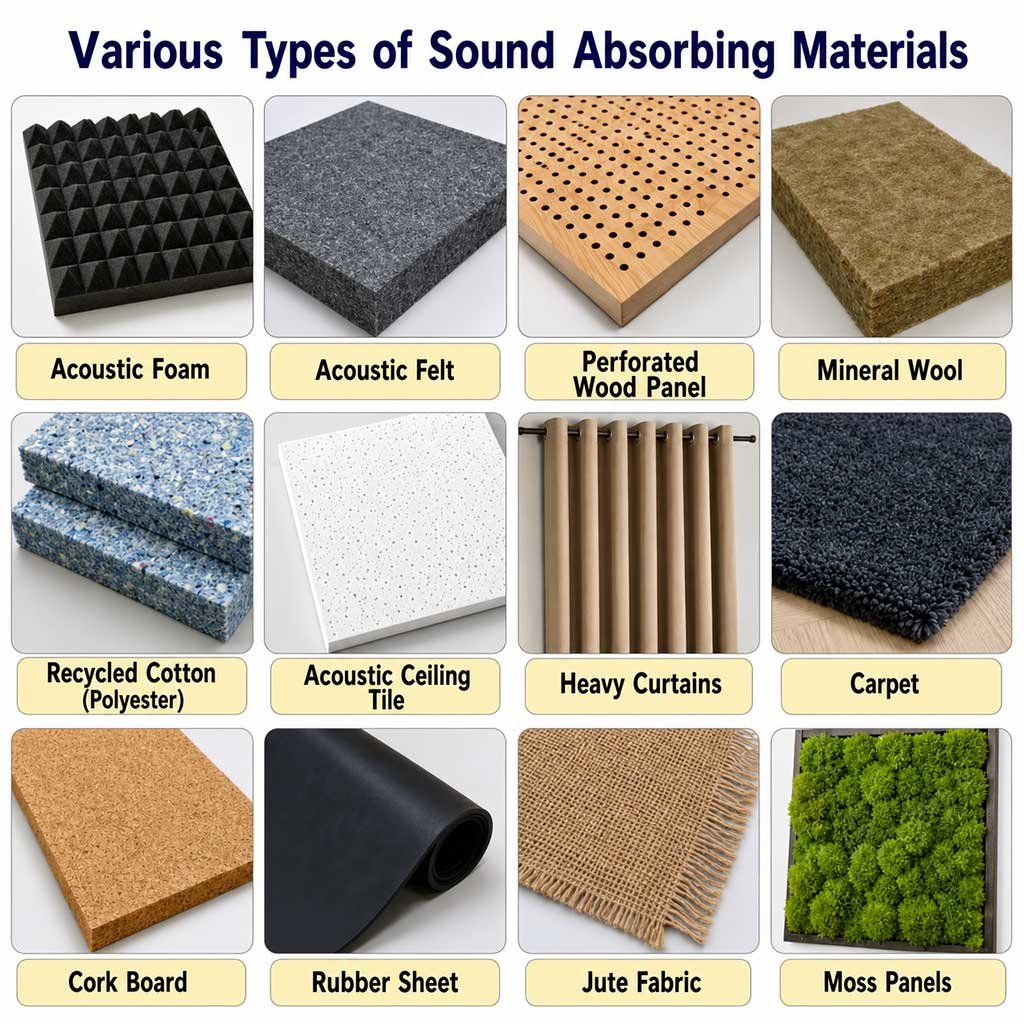
Common acoustic materials include PET acoustic panels, fiberglass, mineral wool, perforated wood panels, and WPC Wall Panels (WPC slat wall panels). Each material has different structural characteristics, acoustic performance across different frequency ranges, and decorative properties.
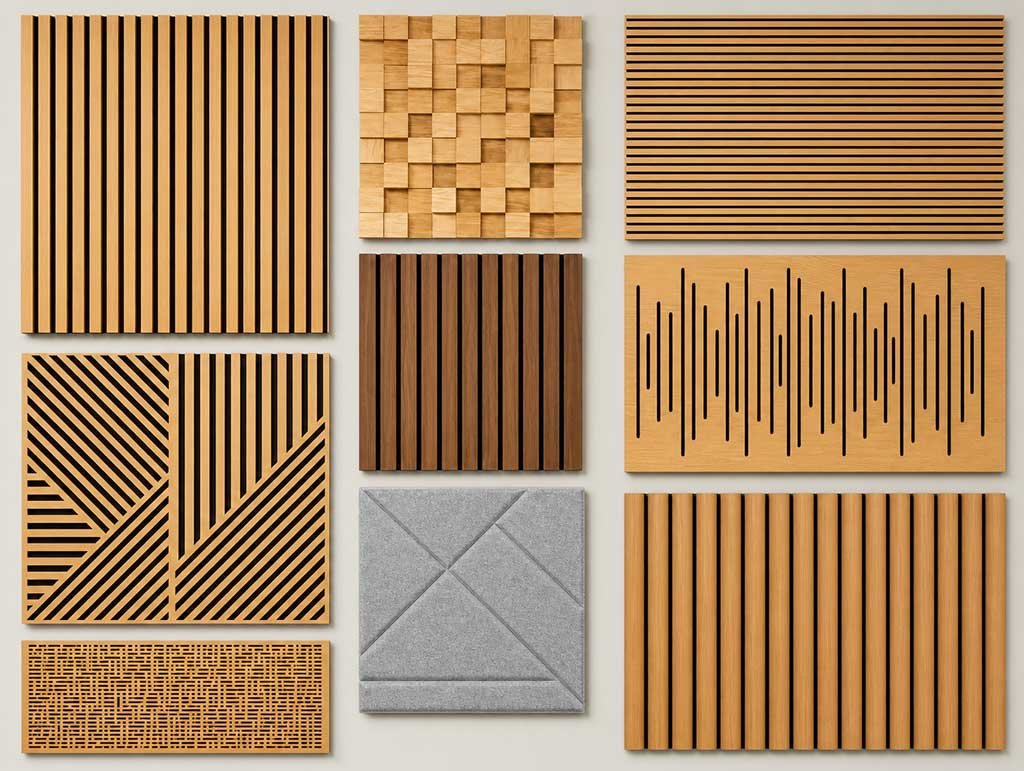
In recent years, WPC slat wall panels combined with PET acoustic backing have also been increasingly used in offices, meeting rooms, hotels, restaurants, commercial spaces, and residential interiors. This type of wall system combines the decorative appearance of wood-look slats with acoustic materials behind the slats to improve the indoor acoustic environment.
Therefore, the effectiveness of an acoustic wall system should not be judged simply by its material name. Factors such as material structure, thickness, open area, acoustic backing, air cavity, installation coverage, and actual test data should all be considered.
How Do Acoustic Panels Absorb Sound?
When sound waves encounter hard surfaces such as walls, glass, and ceramic tiles, a large portion of the sound energy is reflected back into the room. When multiple reflections overlap, they can create noticeable echoes and longer reverberation times.
Acoustic materials can reduce part of this reflected sound energy.
For porous acoustic materials such as PET polyester fiber panels, fiberglass, and mineral wool, sound waves enter the material and travel through its fibers and internal pores. Friction and viscous losses between the air particles and the material structure convert part of the acoustic energy into heat, reducing the amount of sound reflected back into the room.
The working principle of a WPC slat wall system is somewhat different.
WPC slats are primarily decorative wall materials. Because gaps are formed between the slats, sound waves can pass through these openings and reach the acoustic layer behind them. When PET acoustic backing is installed behind the WPC slats and an appropriate air cavity is incorporated, the complete wall system can provide both decorative and acoustic functions.
Therefore:
WPC Slats + PET Acoustic Backing + Air Cavity
can generally provide more noticeable acoustic improvement than WPC wall panels installed directly against a hard wall.
What Are Sound Absorption Coefficient α and NRC?
Common indicators used to evaluate sound absorption include the sound absorption coefficient α and NRC (Noise Reduction Coefficient).
The sound absorption coefficient indicates the ability of a material to absorb sound energy at a specific frequency. A higher value generally indicates greater sound absorption at that particular frequency.
Because acoustic materials can perform very differently across different frequency ranges, a single number should not be used to fully describe their acoustic performance.
NRC is a simplified rating commonly used to compare the overall sound absorption performance of materials based on absorption coefficients at several standard frequencies.
For WPC slat wall systems using PET acoustic backing, it is particularly important to consider:
- The open area of the WPC slats
- PET backing thickness
- PET material density
- Air cavity depth behind the acoustic backing
- The complete installation method
- Sound absorption coefficients at different frequencies
- NRC data for the complete wall system
It is therefore not appropriate to assume that a WPC material itself has one fixed NRC value.
How Do Different Acoustic Materials Compare?
| Material | Main Function | Sound Absorption | Decorative Effect | Typical Applications |
|---|---|---|---|---|
| PET Acoustic Panel | Sound absorption | Good | Good | Offices, recording studios, meeting rooms |
| Fiberglass | Sound absorption | Good | Moderate | Professional acoustic spaces |
| Mineral Wool | Sound absorption | Good | Requires finishing | Architectural acoustic applications |
| Perforated Wood Panel | Sound absorption + decoration | Depends on structure | Good | Hotels, meeting rooms |
| WPC Slat Wall Panel | Decoration + component of an acoustic system | Depends on backing structure | Excellent | Offices, hotels, commercial spaces |
| WPC + PET System | Decoration + sound absorption | Depends on the complete system | Excellent | Meeting rooms, feature walls, commercial spaces |
It is important to note that the acoustic performance of a WPC slat wall system depends primarily on the complete system rather than the WPC material alone.
When WPC slats are installed directly against a solid wall, their primary function remains decorative. When PET acoustic backing is installed behind the slats with an appropriate air cavity, the system can provide both decorative and acoustic benefits.
Where Are WPC Slat Wall Panels Suitable for Installation?
WPC Wall Panels offer strong decorative potential, making them particularly suitable for commercial and public spaces where both interior design and acoustic comfort are important.
Common applications include:
Offices
WPC slat wall panels can be used on feature walls, reception areas, lounges, and common areas. When combined with acoustic backing, they can enhance the visual appearance while helping reduce sound reflections.
Meeting Rooms
Meeting rooms often require good speech intelligibility. WPC slats combined with PET acoustic backing can be installed on side walls, rear walls, or selected feature wall areas.
Hotels
Wood-look WPC slats can be used in hotel lobbies, corridors, restaurants, and lounges. They can also be combined with lighting, metal decorative trims, and other interior materials to create a more distinctive design.
Restaurants and Commercial Spaces
Open-plan commercial spaces often contain many hard surfaces that reflect sound. WPC slat wall systems can combine decorative wall design with acoustic improvement.
Residential Interiors
WPC slat wall panels can be used for TV feature walls, sofa background walls, home offices, and home theater spaces.
How Can RT60 Be Used to Determine Whether a Space Needs Acoustic Treatment?
RT60, or reverberation time, is an important parameter in architectural acoustics.
It refers to the time required for the sound pressure level to decrease by 60 dB after the sound source stops.
According to the Sabine formula:
RT60 ≈ 0.161 × V / A
where:
- V = room volume (m³)
- A = total equivalent sound absorption area (m² Sabins)
Adding PET acoustic materials, WPC + PET acoustic wall systems, acoustic ceilings, carpets, and soft furnishings can increase the total sound absorption of a room and potentially reduce its reverberation time.
For meeting rooms, offices, classrooms, and commercial spaces, achieving an appropriate RT60 is often more important than simply selecting a material with the highest possible sound absorption rating.
How Should You Choose WPC Wall Panels?
If a project requires both decorative wall finishes and improved acoustic performance, several factors should be considered.
1. Check the WPC Structure
Consider the WPC slat width, thickness, spacing, and open area.
2. Check the PET Acoustic Backing
Review the thickness, density, and actual acoustic test data of the PET backing material.
3. Check Complete System Data
If a supplier claims that a WPC wall panel provides acoustic performance, ask whether the test was conducted on:
the WPC material alone, or the complete WPC + PET acoustic wall system.This distinction is important.
4. Review Frequency Data
Do not focus only on the NRC value. It is also important to review sound absorption coefficients across different frequencies, particularly 250 Hz, 500 Hz, 1000 Hz, 2000 Hz, and 4000 Hz.
5. Consider the Actual Installation Method
The final acoustic performance of the same WPC wall panel can vary depending on the acoustic backing, air cavity, supporting structure, and installation method.
Can WPC Slat Wall Panels Replace Professional Acoustic Panels?
This should not be interpreted that way.Standard WPC Wall Panels are primarily decorative wall materials.
If a project has specific acoustic performance requirements, a tested acoustic system should be considered, such as: WPC Slats + PET Acoustic Backing + Air Cavity
The design should then be based on test data for the complete system.
For professional recording studios, sound reinforcement spaces, or architectural acoustic projects with specific performance requirements, additional acoustic calculations and professional acoustic design may be required.
The advantage of WPC is therefore its ability to combine interior decoration with acoustic functionality, rather than simply replacing all types of professional acoustic materials.
FAQ
1. Do WPC Wall Panels have sound absorption properties?
WPC is primarily used as a decorative wall material. Standard WPC installed directly against a hard wall generally provides limited sound absorption. When PET acoustic backing and an appropriate air cavity are incorporated behind WPC slats, the system can provide acoustic absorption as part of a decorative acoustic wall solution.
2. Can WPC slat wall panels be used with PET acoustic panels?
Yes. WPC slats can serve as the decorative surface, while PET acoustic panels act as the sound-absorbing backing. Together, they can provide both visual appeal and improved indoor acoustic performance.
3. Can WPC wall panels provide sound insulation?
Standard WPC wall panels should not be considered a substitute for a professional sound insulation wall system. WPC is mainly used for decoration and indoor acoustic improvement, while sound insulation depends on factors such as wall mass, structural design, airtightness, and dedicated sound insulation materials.