Manufacturing Process
Learn about the manufacturing processes for SPC flooring, SPC wall panels, WPC wall panels, soft stone, and decorative trims.
As people place greater emphasis on quality of life and healthy living environments, the environmental performance and safety of interior and exterior decorative materials have become key considerations when selecting building materials.
Therefore, our products follow the principles of environmental sustainability and ecological recycling. We specialize in SPC flooring and wall panels, WPC wall panels, soft stone, and a wide range of decorative trims and accessories. We focus on the environmental performance of raw materials and the health and safety of finished products, providing more eco-friendly and durable decorative material solutions for residential, commercial, and public spaces.
Although SPC, WPC, and soft stone are based on different material systems, they share similarities in several aspects, including raw material selection, formulation and mixing, and forming and processing.
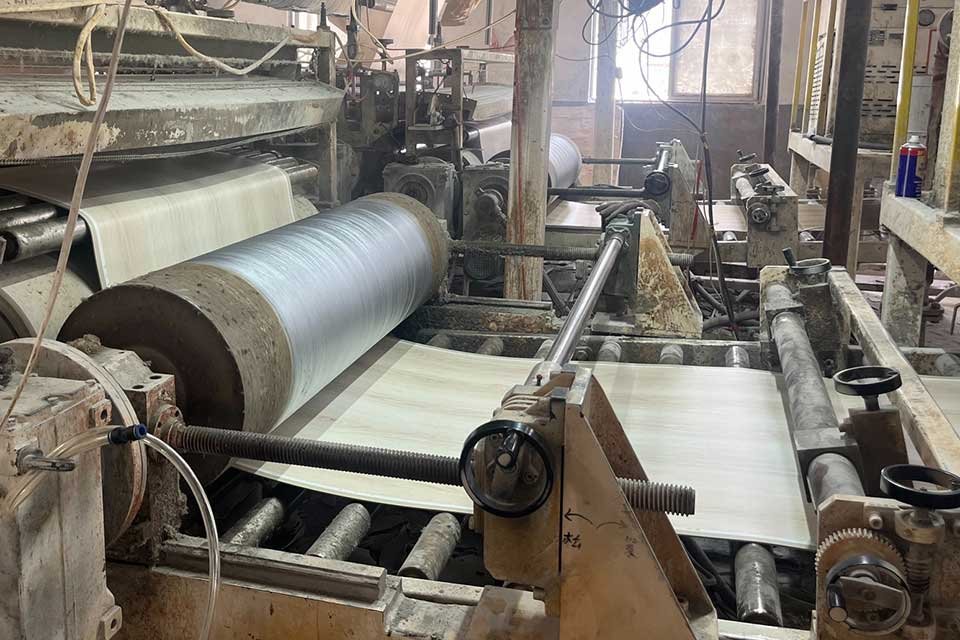
SPC Edge Trim
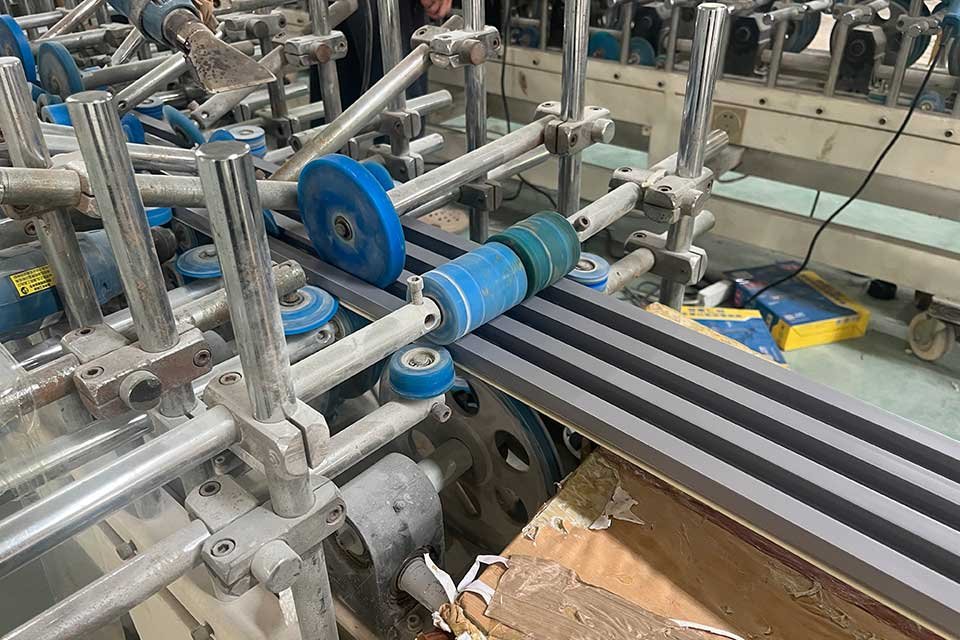
WPC Ceiling / Tube
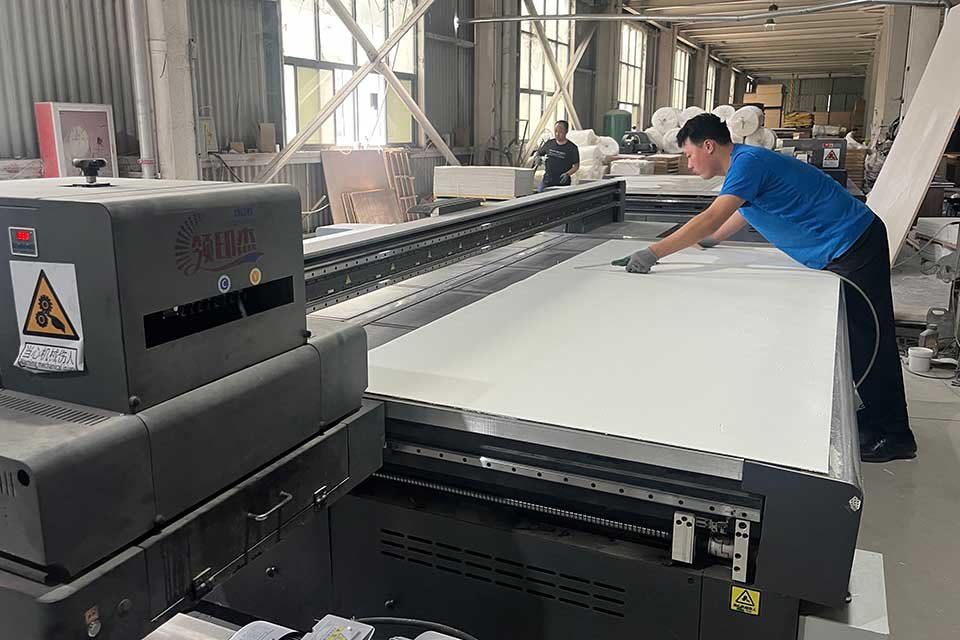
WPC Decorative Trim
SPC, WPC & Soft Stone Comparison
The following formulations are for reference only and may vary depending on the product type and manufacturer.
| Material | Main Raw Materials | Typical Material Formulation* | Forming Method |
|---|---|---|---|
| SPC | Calcium carbonate powder, PVC resin, stabilizers, lubricants, and other additives | Calcium carbonate: 30%; PVC resin: 65% | Extrusion, calendering, and cutting |
| WPC | Wood flour/plant fibers, PVC resin, processing additives | Wood flour or plant fibers as the primary filler | Extrusion and cutting |
| Soft Stone | Calcium carbonate and other inorganic mineral powders, polymer materials, fiberglass mesh, and related additives | Mineral powder as the primary filler | Roll pressing/texturing and cutting |
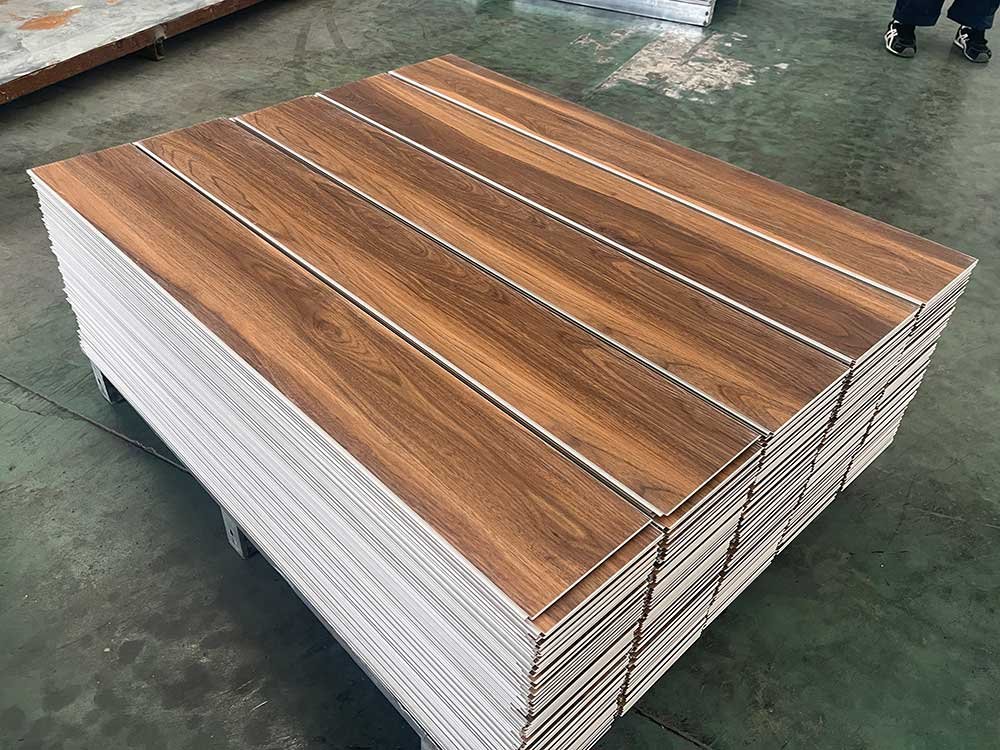
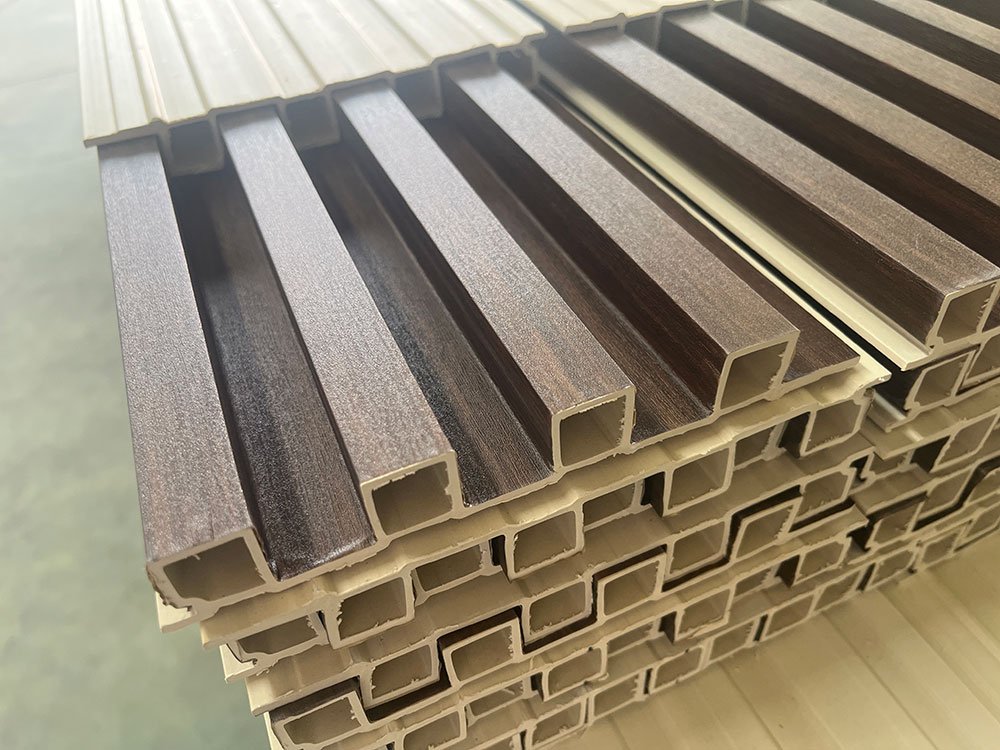
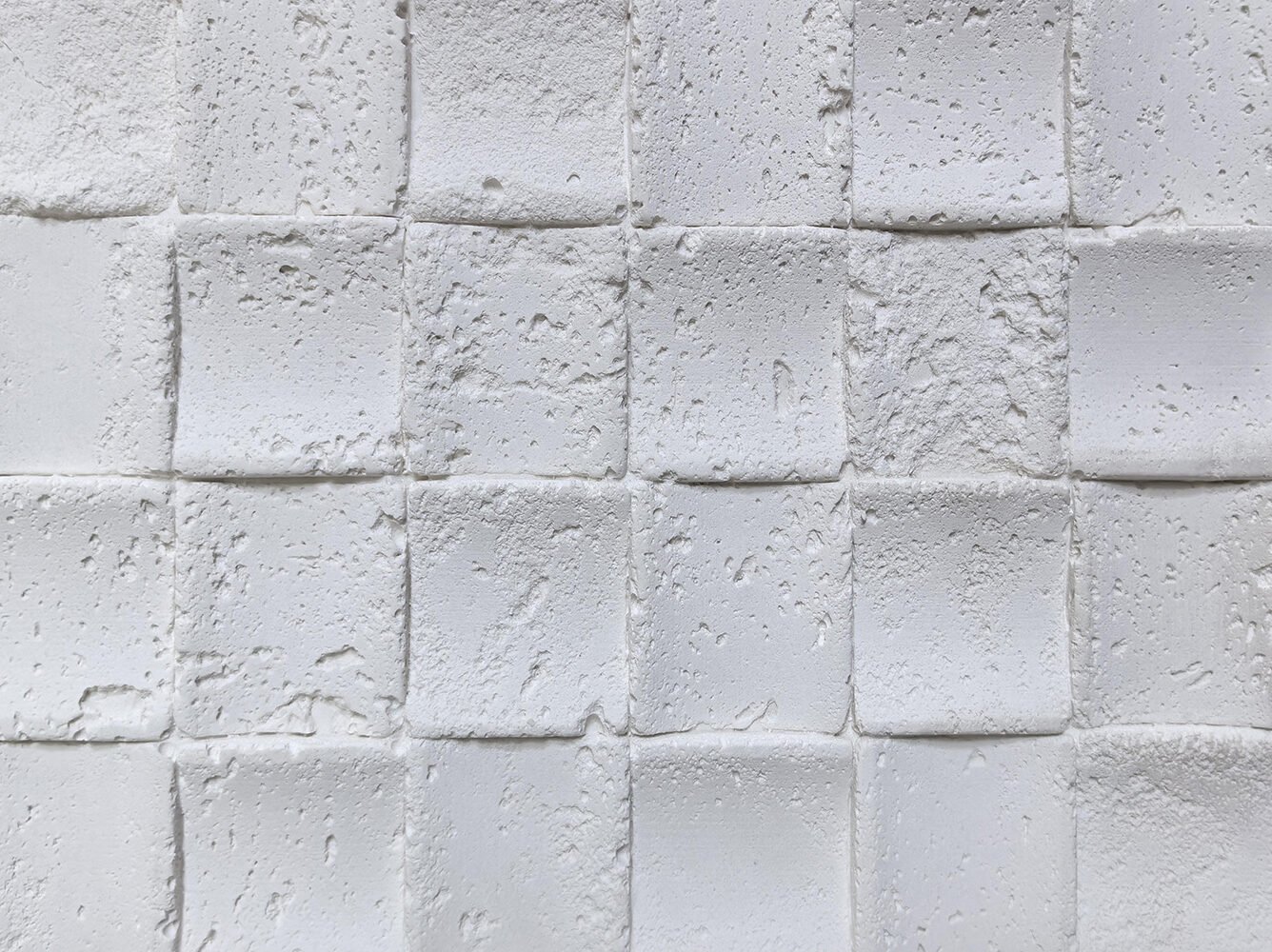
As shown above, SPC, WPC, and soft stone can incorporate mineral powders, wood fibers, recycled materials, and various stabilizers or processing additives. Their manufacturing processes generally rely on extrusion, pressing, rolling, molding, and cutting rather than traditional adhesive-based forming. As a result, these material systems can reduce or avoid the use of formaldehyde-based adhesives in the manufacturing process.
SPC Flooring
| Material | Chemical Name | Typical Proportion | Main Function |
|---|---|---|---|
| Calcium Carbonate | Calcium Carbonate, CaCO₃ | 30–40% | Increases rigidity and dimensional stability. Calcium carbonate powder is less expensive than PVC resin, so a higher CaCO₃ content generally helps reduce flooring costs. |
| PVC Resin | Polyvinyl Chloride (PVC) | 60–70% | Acts as the thermoplastic matrix, improving material toughness and reducing brittleness. |
| Plasticizers / Processing Aids | Processing Aids | 1–3% | Improve plasticization and melt flow during processing. |
| Heat Stabilizer | Ca-Zn Stabilizer | 1–3% | Helps prevent thermal degradation of PVC during processing. |
| Internal & External Lubricants | Calcium Stearate / Paraffin Wax, etc. | 0.3–1.5% | Improve processing performance and mold release. |
| Impact Modifier | CPE / Acrylic Modifier | 0–5% | Improves impact resistance and toughness. |
| Titanium Dioxide | Titanium Dioxide, TiO₂ | 0–5% | Improves whiteness and opacity. |
| Color Masterbatch / Pigments | Pigments | 0.1–3% | Adjusts the color of the SPC material. |
In SPC production, a higher CaCO₃ content is not necessarily better. High mineral loading can increase rigidity and density, but it may also increase melt viscosity and reduce impact toughness. Therefore, the PVC content, CaCO₃ particle size, and surface treatment of the mineral filler can all affect the final performance of the flooring.
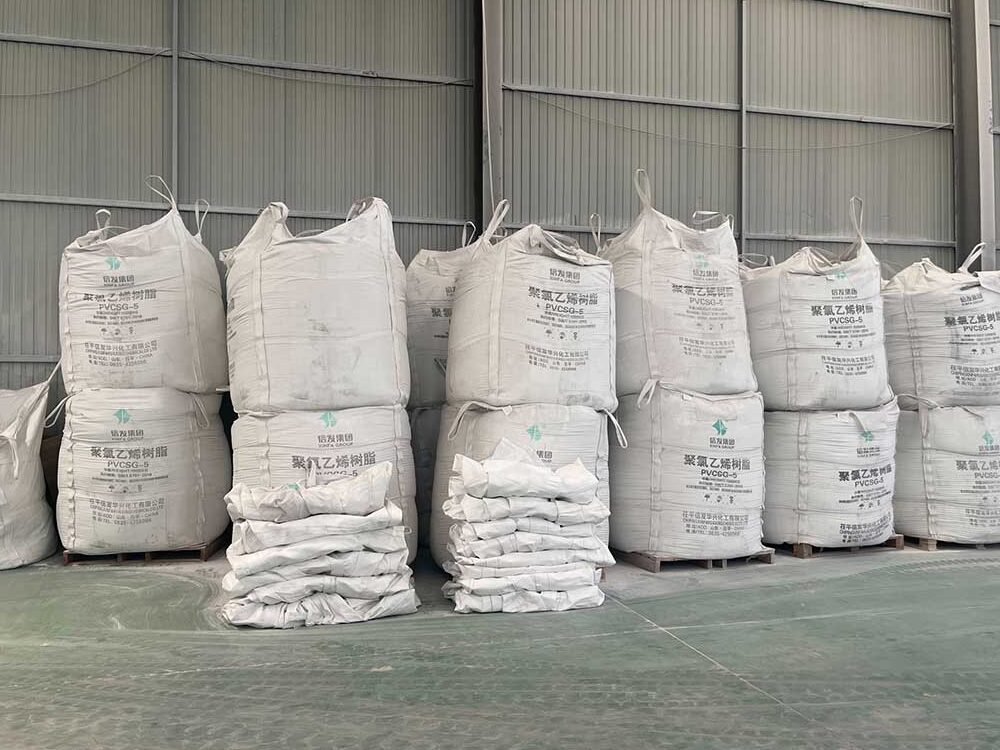
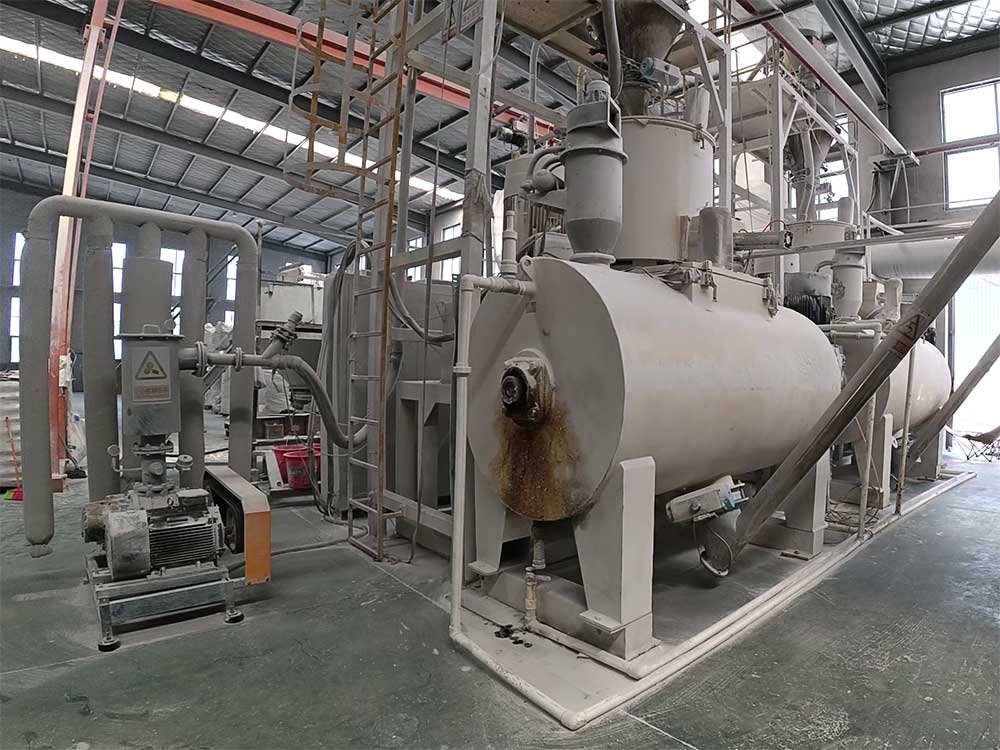
Typical Manufacturing Process
Raw Material Mixing → Heating & Plasticization → Extrusion / Calendering → Surface Film Lamination → Cooling & Setting → Cutting → Wear Layer Lamination → UV Curing → Final Cutting → Click-Lock Profiling → EVA/IXPE Underlayment → Finished Product Packaging
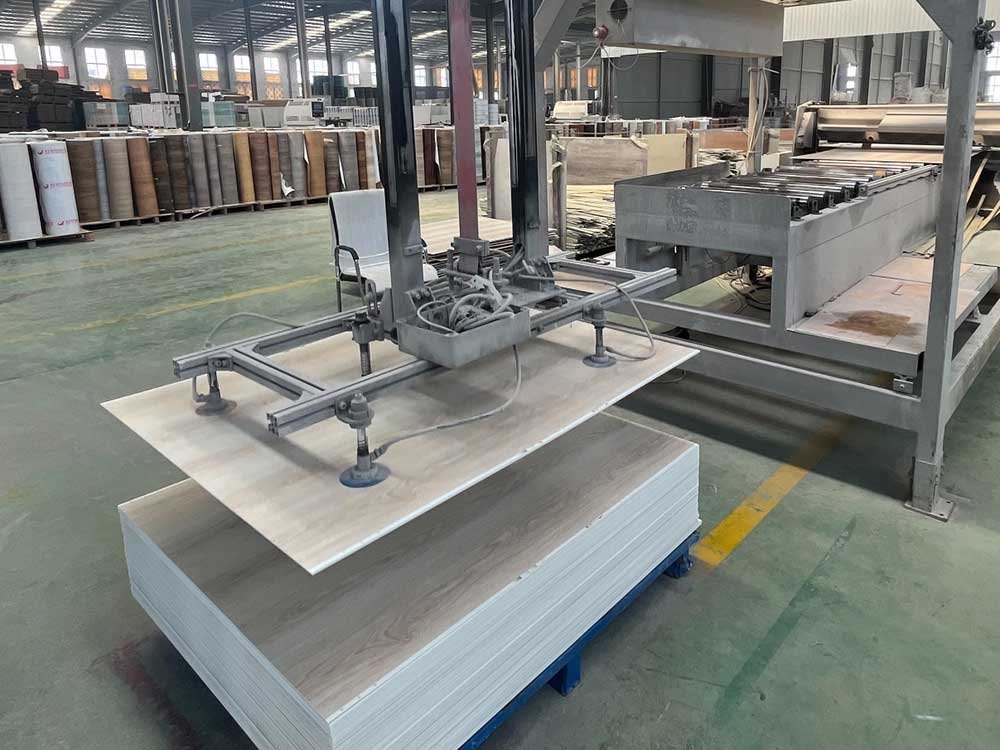
Cutting & Sheet Separation
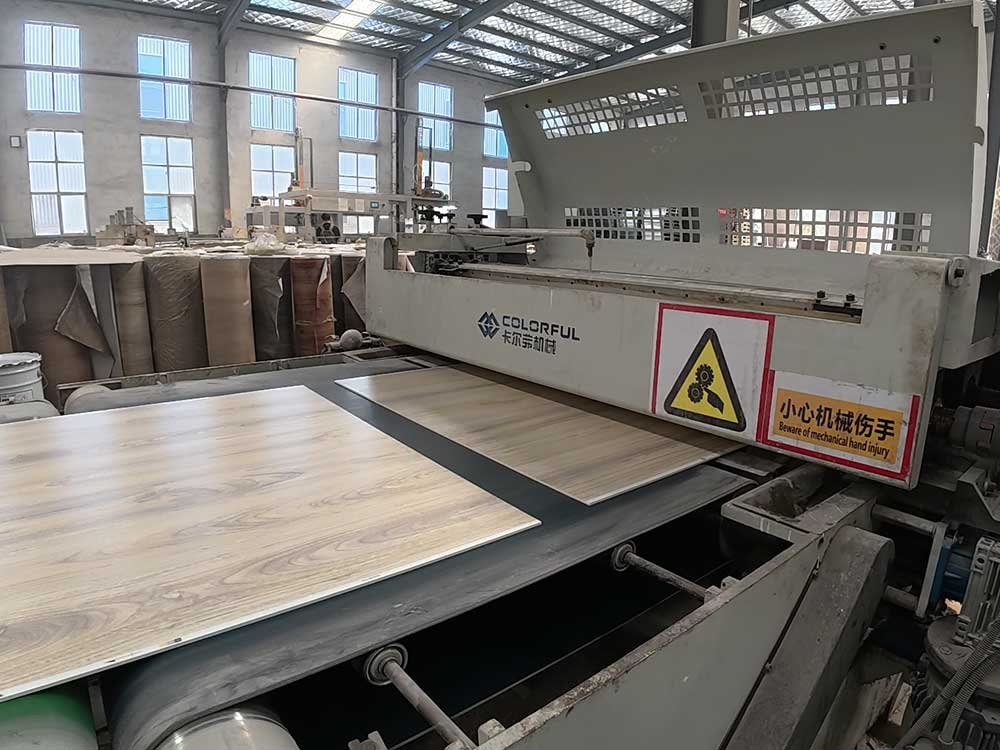
Transparent Wear Layer Lamination
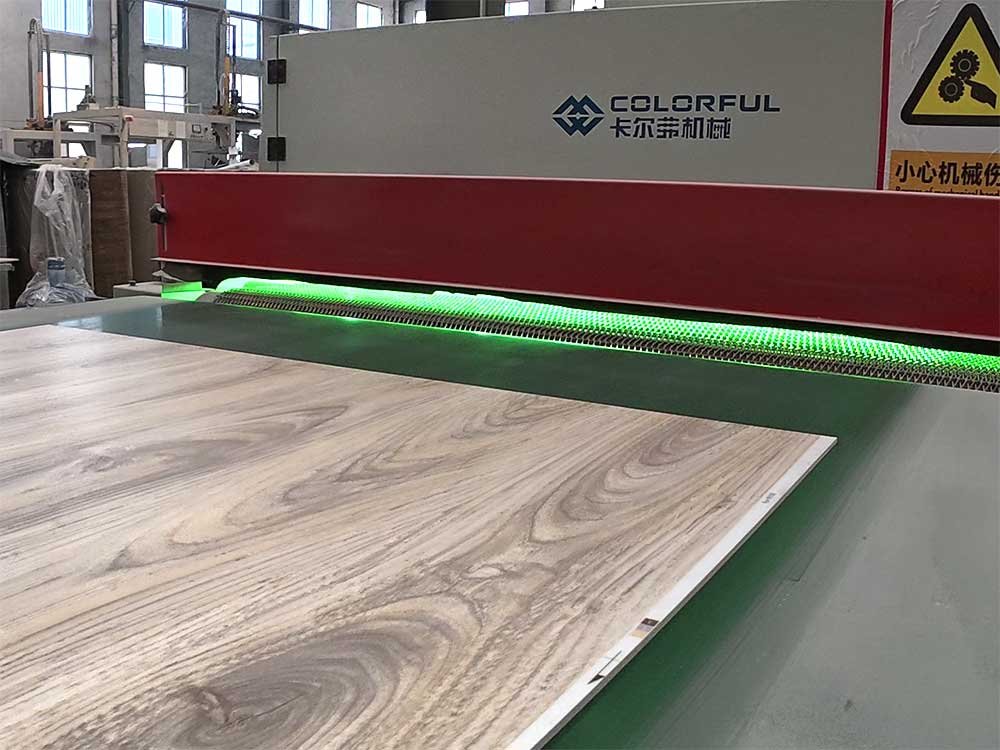
UV Curing
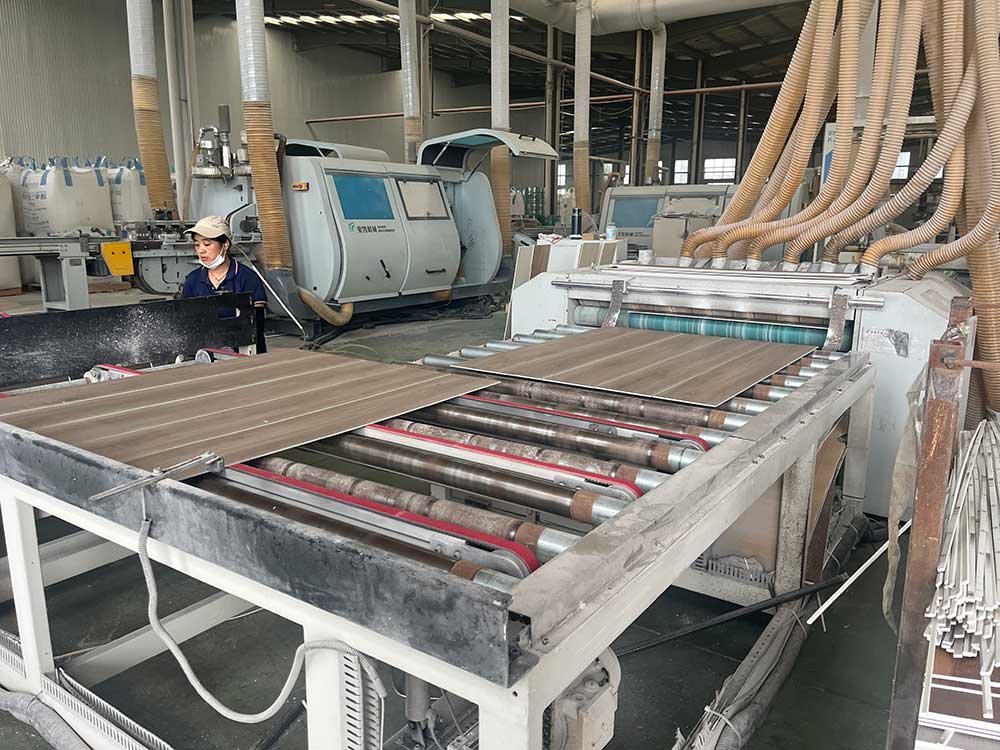
Precision Cutting
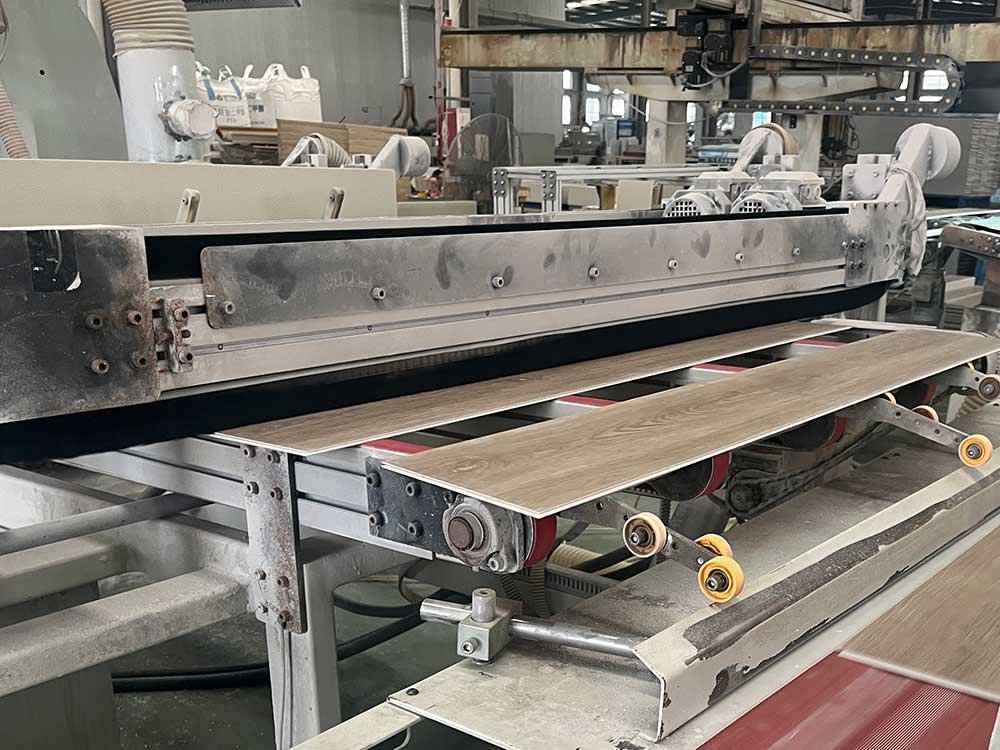
Click-Lock Profiling
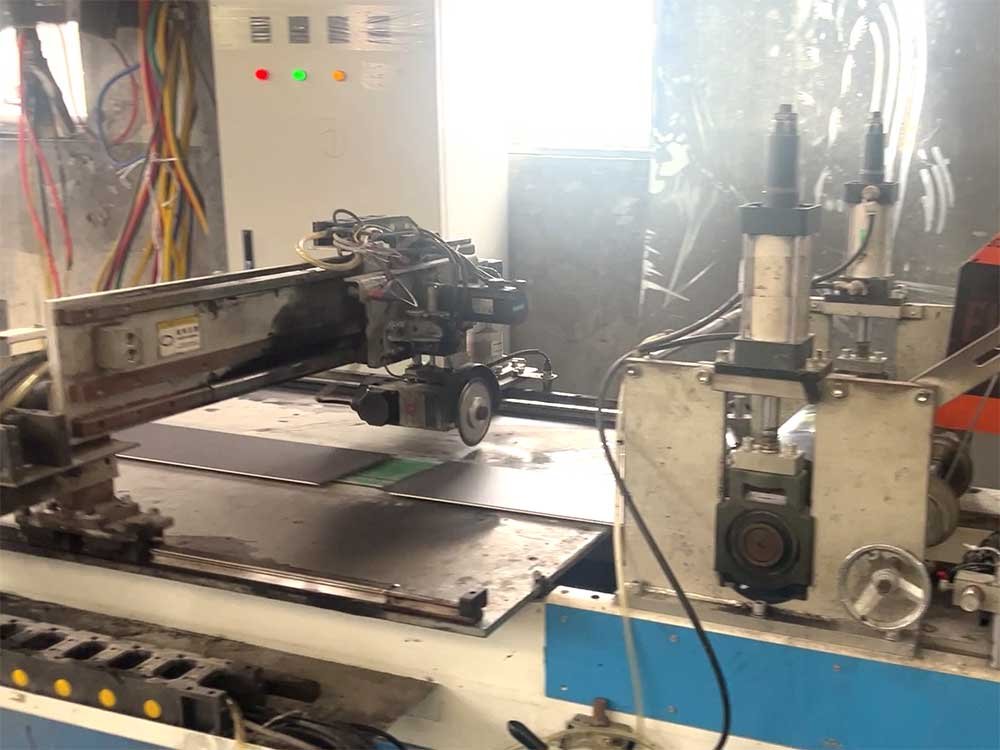
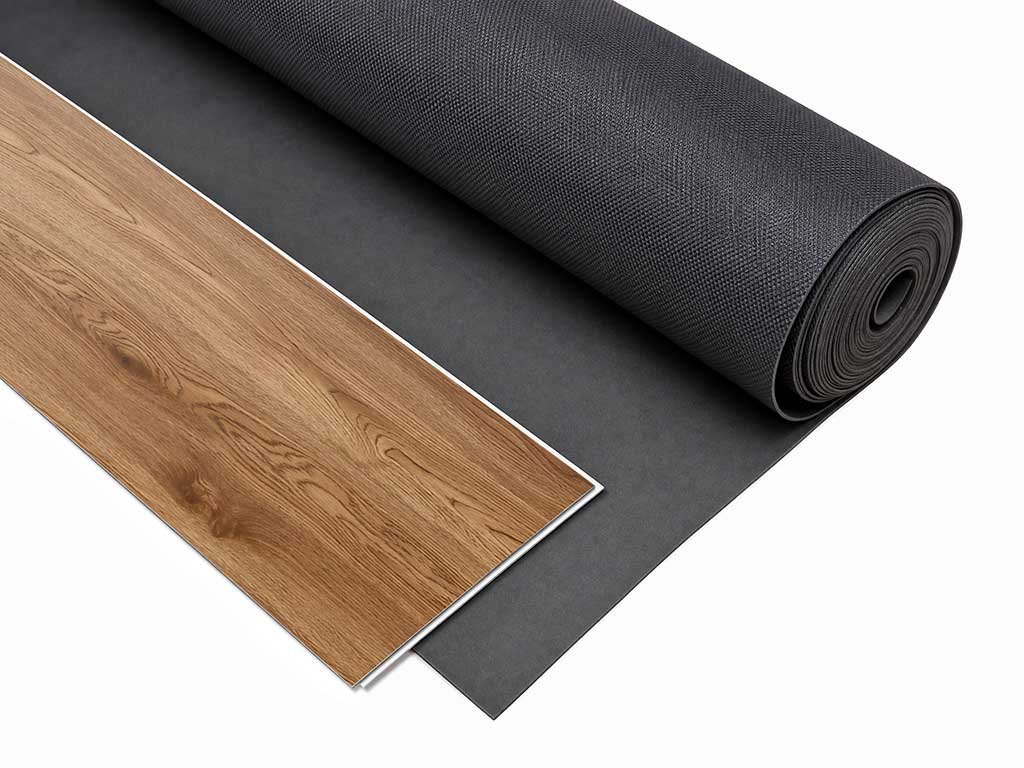
EVA / IXPE Acoustic Underlayment
Typical SPC Flooring Structure
Due to different application environments and wear requirements, SPC flooring involves multiple downstream processes. In addition to the decorative film, these processes typically include the application of a wear layer, UV surface treatment, and acoustic underlayment.
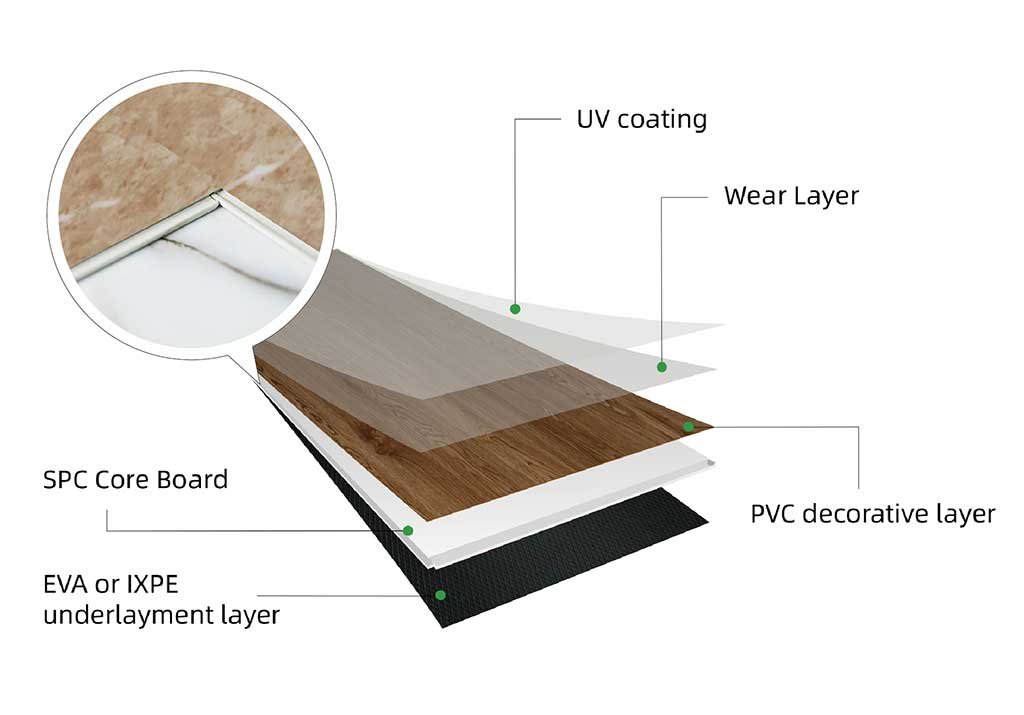
| No. | Layer | Typical Thickness | Description |
|---|---|---|---|
| ↓ | UV Coating | ≈ 0.01–0.03 mm | UV protective surface coating |
| ↓ | Wear Layer | ≈ 0.10–0.50 mm | Provides wear and abrasion resistance |
| ↓ | Decorative Film | ≈ 0.07–0.15 mm | PVC decorative film, typically around 0.10 mm |
| ↓ | SPC Core | ≈ 4–8 mm | Rigid SPC structural core |
| ↓ | IXPE / EVA Underlayment | ≈ 1–2 mm | Provides cushioning, sound reduction, and underfoot comfort |
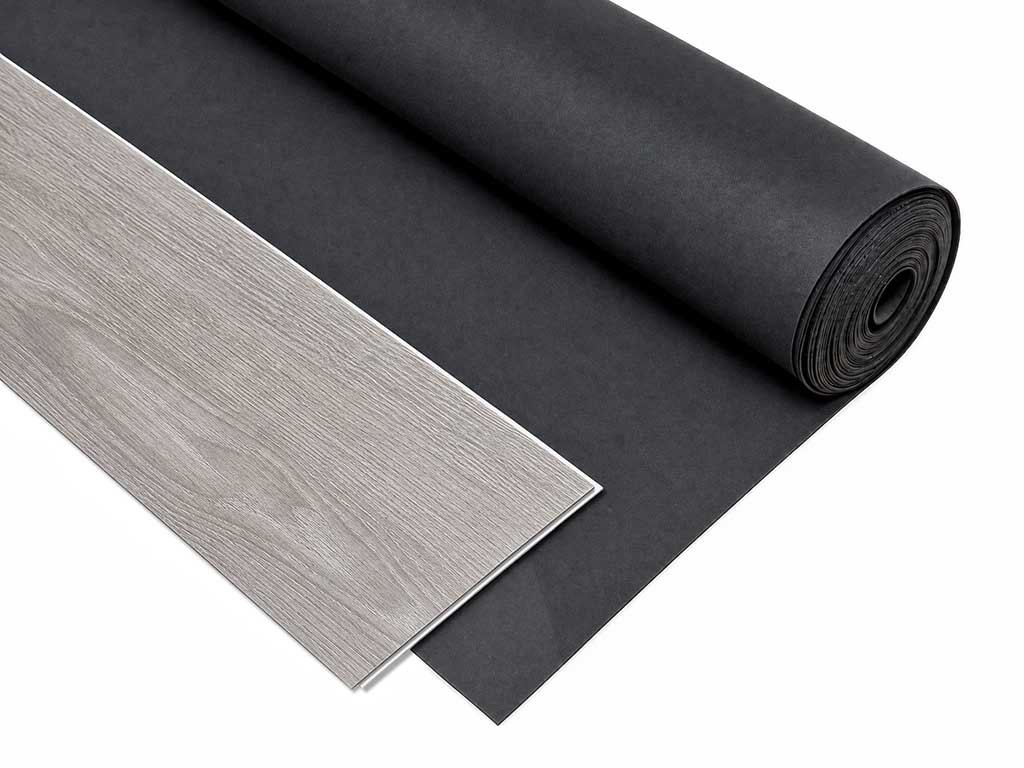
EVA Acoustic Underlayment
IXPE Acoustic Underlayment
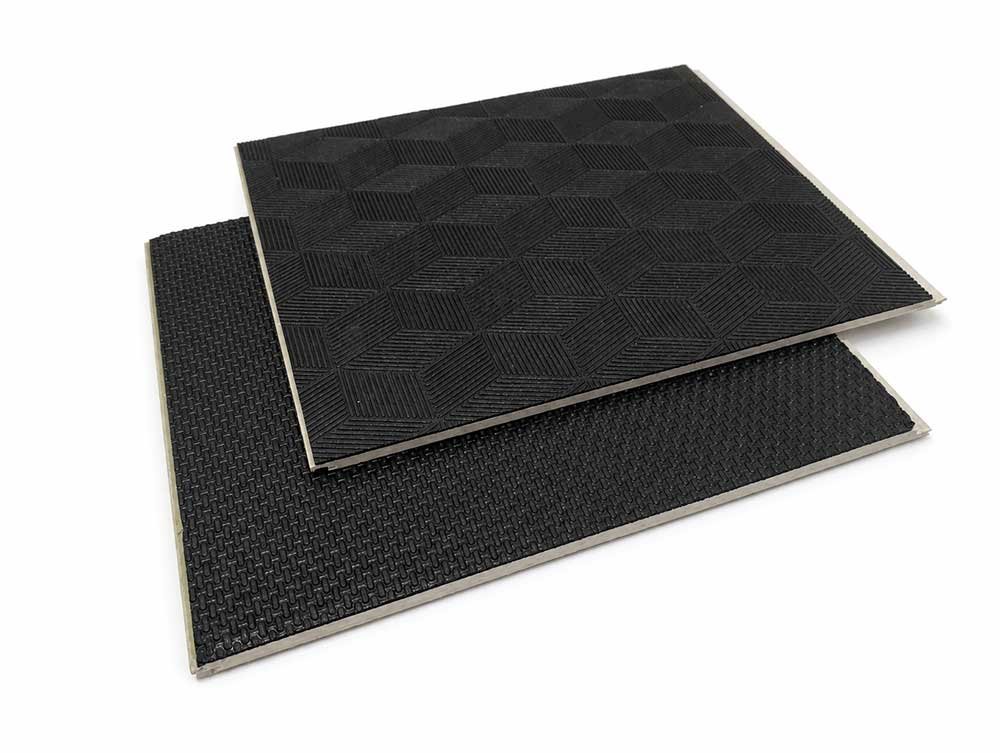
Two Types of IXPE Acoustic Underlayment
WPC Wall Panels / WPC Decorative Trims
| Material | Chemical Name | Typical Proportion | Main Function |
|---|---|---|---|
| Wood Flour | Wood Flour / Cellulose Fiber | 50–60% | Acts as the primary filler, increases rigidity, and provides a natural wood-like texture. |
| PVC Resin | Polyvinyl Chloride (PVC) | 30–40% | Melts and plasticizes during processing to encapsulate and bind the wood flour or plant fibers, providing bonding and forming capability while improving water resistance and material toughness. |
| Heat Stabilizer | Ca-Zn Stabilizer | 1–3% | Improves the thermal stability of PVC during processing. |
| Lubricant | PE Wax / Paraffin Wax / Calcium Stearate | 0.5–2% | Improves melt flow and extrusion performance. |
| Flame Retardant | — | Depending on the required flame-retardant target | Improves flame resistance and helps achieve the required fire-performance rating. |
| Coupling / Interfacial Modifier | MAPP, etc., depending on the polymer system | Depending on the formulation | Improves the interfacial bonding between the polymer matrix and wood fibers. |
| Impact Modifier | Acrylic Modifier / CPE, etc. | 0–3% | Improves toughness and impact resistance. |
| Pigments | TiO₂ / Iron Oxides, etc. | 0–5% | Provides color and adjusts the appearance of the finished product. |
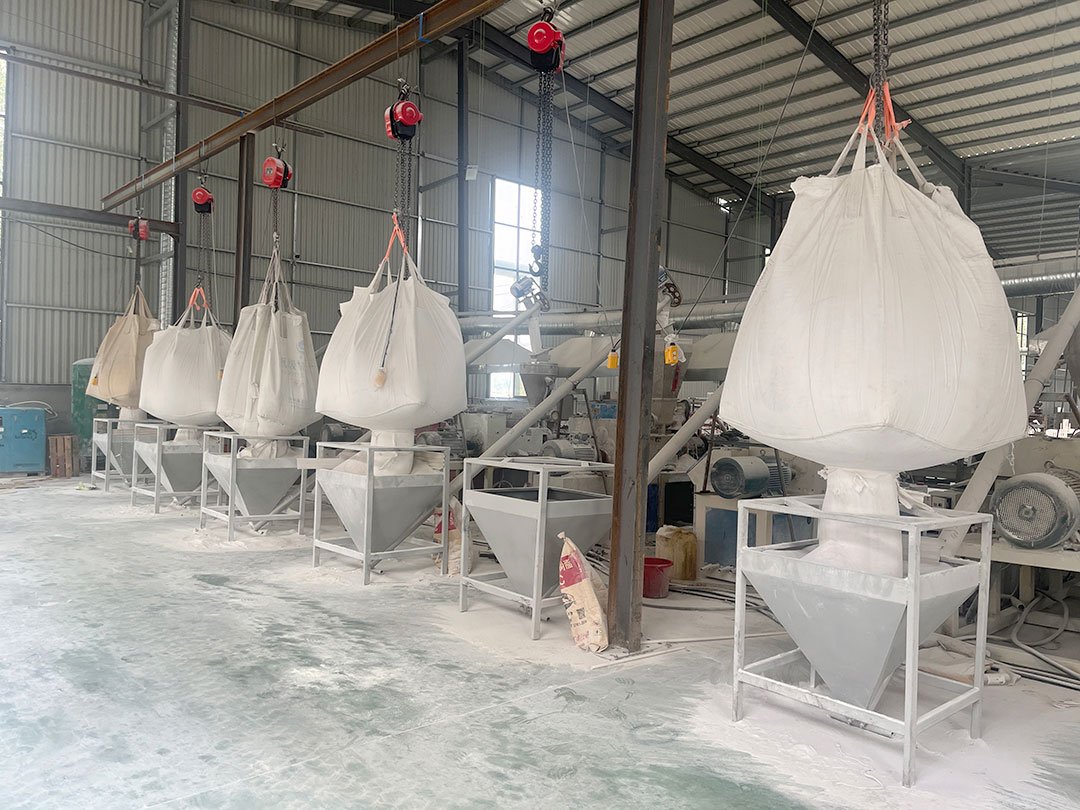
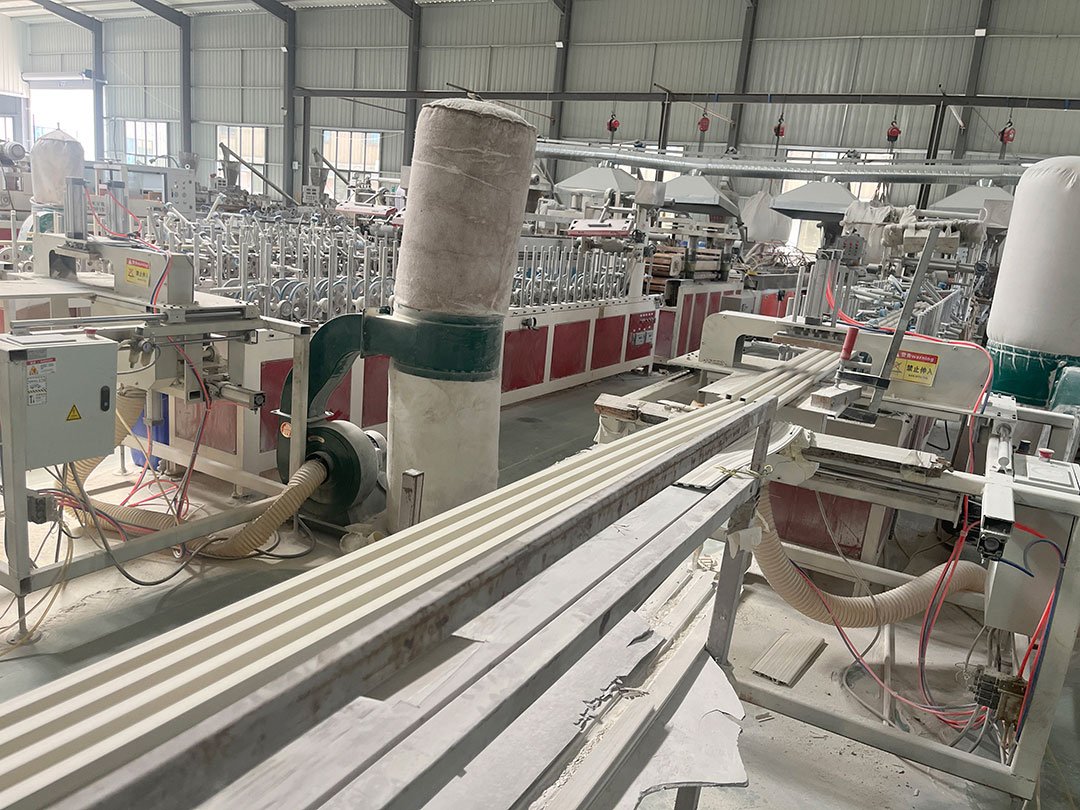
Key WPC Manufacturing Process
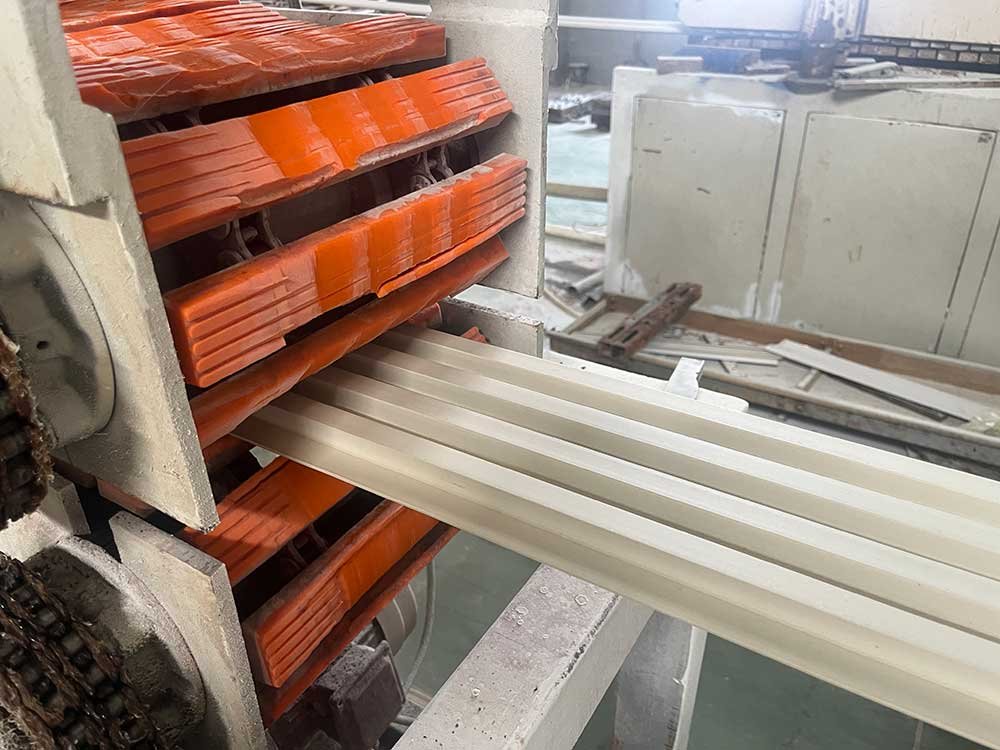
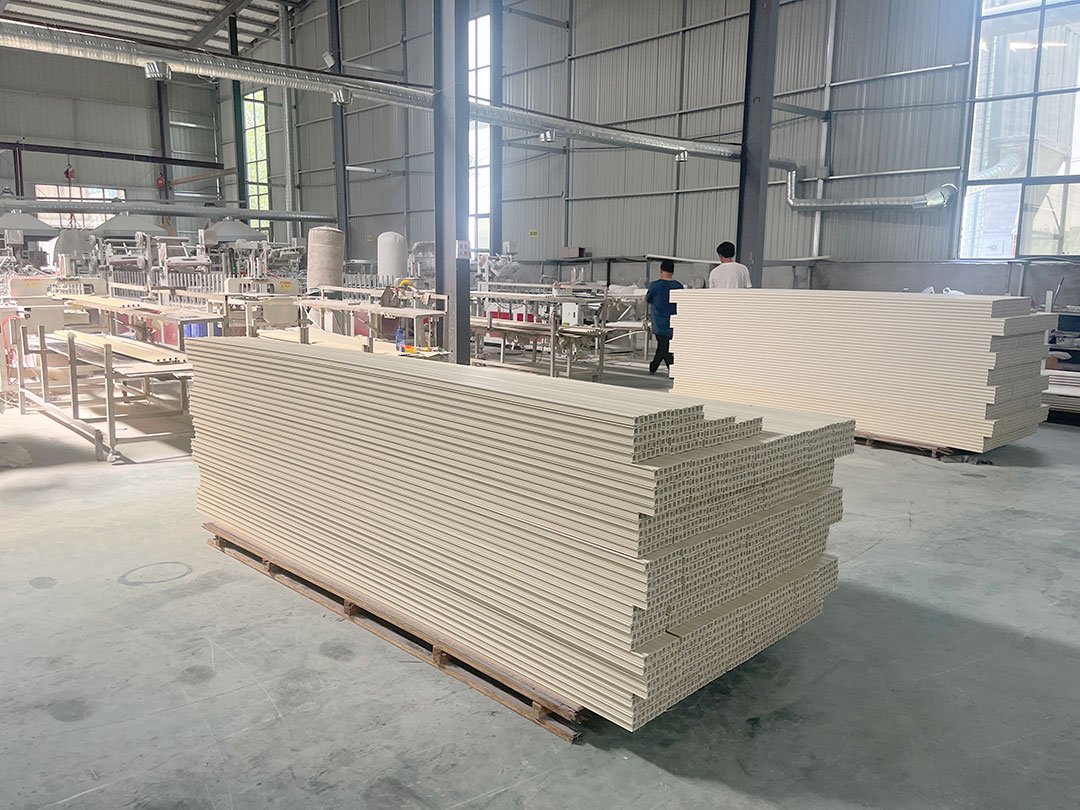
Raw Material Mixing → Heating & Plasticization → Extrusion & Profile Forming → Cooling & Setting → Haul-Off → Cutting → Surface Treatment / Film Lamination → Quality Inspection → Finished Product Packaging
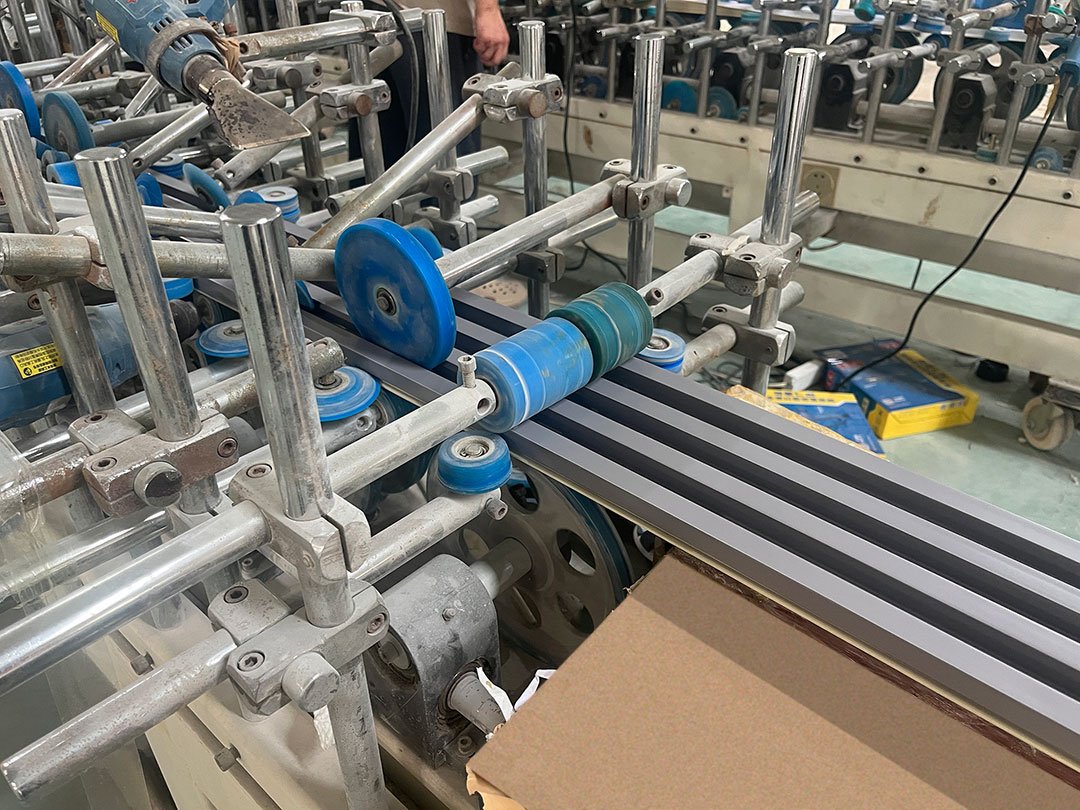
WPC wall panels and decorative trims can undergo additional surface treatments, including film lamination, embossing, and sanding, depending on the desired appearance and performance requirements.
Soft Stone / Flexible Stone
| Material | Chemical Name | Reference Proportion | Main Function |
|---|---|---|---|
| Calcium Carbonate | CaCO₃ | 40–70% | Acts as a mineral filler and improves hardness and dimensional stability. |
| Polymer Emulsion / Resin | Acrylic Polymer / Acrylic Copolymer, etc. | 15–30% | Provides flexibility, adhesion, and binding properties. |
| Silicon Dioxide | Silicon Dioxide, SiO₂ | 0–20% | Adjusts hardness and surface texture. |
| Iron Oxide Pigments | Iron Oxide | 0.5–5% | Provides stone-like colors and decorative effects. |
| Dispersant | Polycarboxylate / Dispersant | 0.1–2% | Improves the dispersion of mineral powders within the formulation. |
| Defoamer | Defoamer | 0.1–1% | Reduces air bubbles and foam during mixing and forming. |
| Thickener / Rheology Modifier | Rheology Modifier | 0.1–2% | Adjusts the flow and rheological properties of the slurry during processing and forming. |
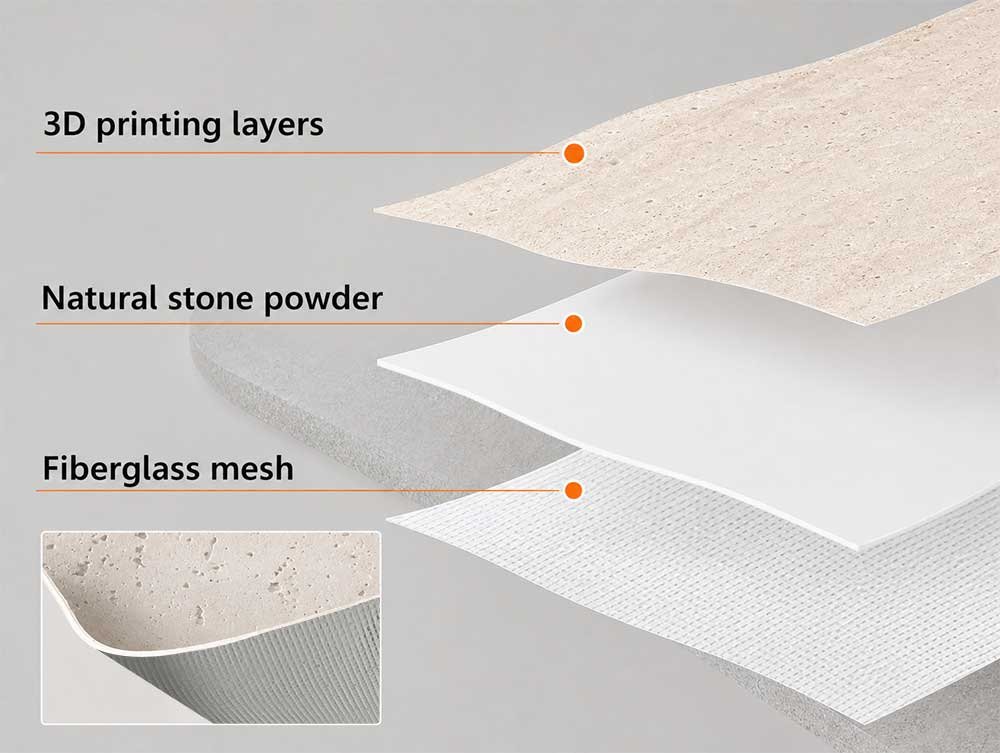
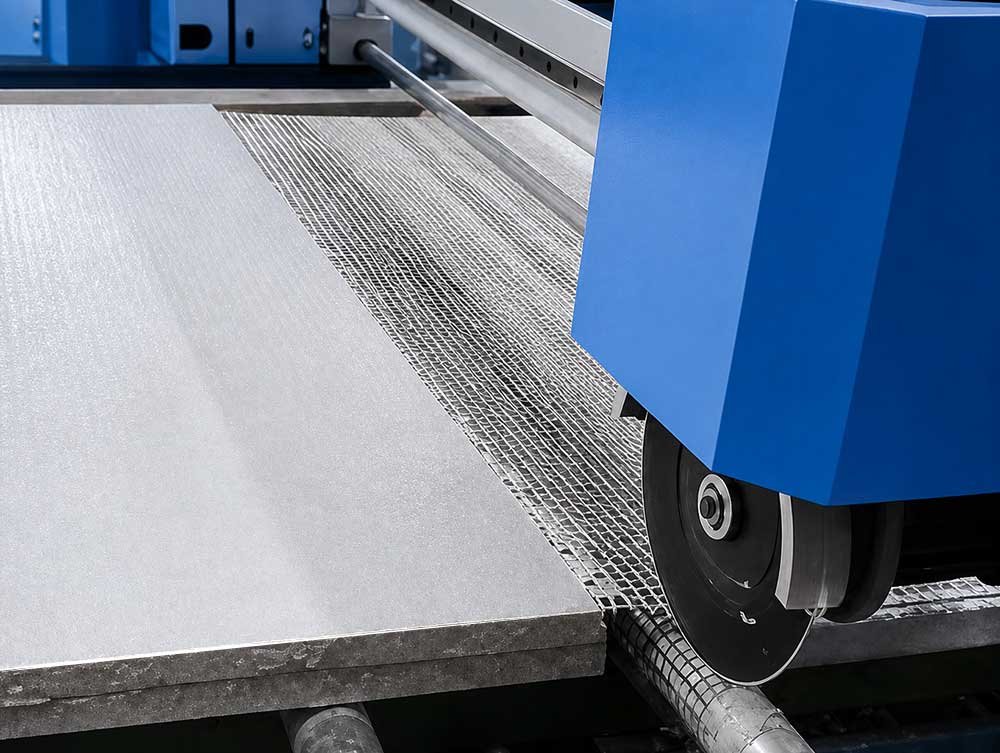
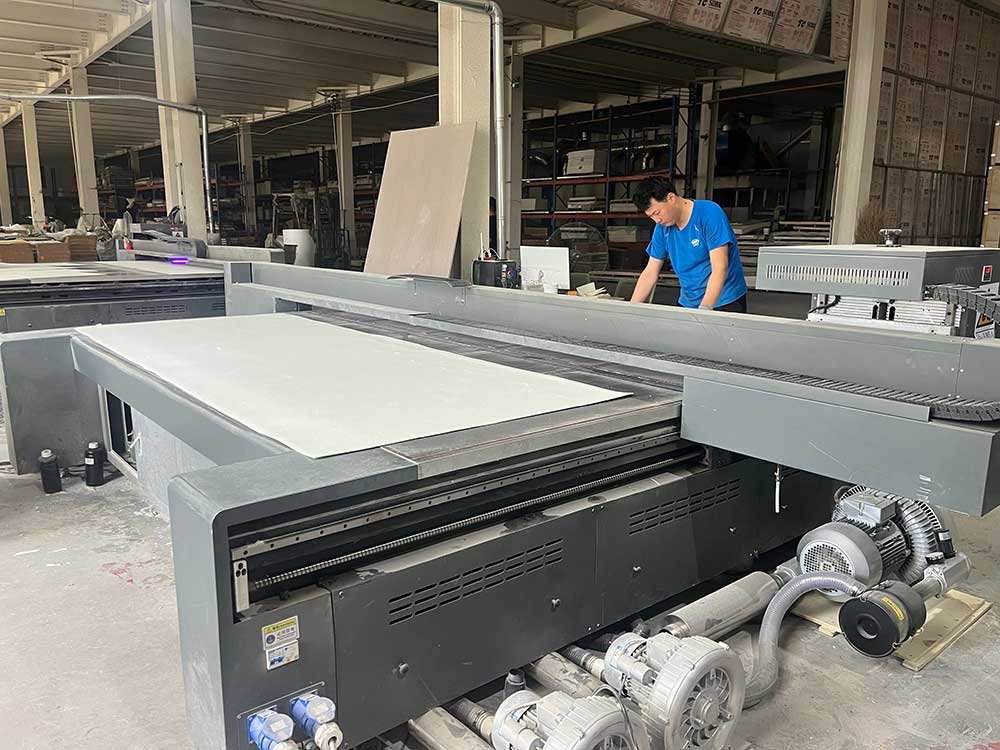
Typical Manufacturing Process
Fiberglass Mesh Substrate Placement
→ Mineral / Polymer Slurry Mixing
→ Material Feeding
→ Primary Baking / Drying
→ Texture Roll Pressing
→ Secondary Fiberglass Mesh Lamination
→ Secondary Baking / Drying
→ Cutting
→ 3D Color Printing
→ Packaging
Depending on the thickness and structural requirements of the soft stone, single-layer or double-layer fiberglass mesh reinforcement can be used.
Different decorative effects can be achieved through surface texturing, color customization, 3D printing, and protective surface treatments.
Green & Eco-Friendly Approach
From an environmental perspective, three key aspects can be highlighted:
Material Selection:
Mineral fillers, wood flour / plant fibers, and thermoplastic materials are used to reduce reliance on traditional formaldehyde-based adhesive systems such as plywood.
Production Process:
Continuous extrusion and mechanized production improve material utilization, while offcuts and production waste are sorted and recycled for further use.
Product Use:
By controlling raw materials and processing additives, unnecessary sources of potentially harmful substances can be reduced. Third-party testing can also be used to evaluate and verify the environmental performance of the finished products.
FAQ
1. What Are the Main Differences Between SPC, WPC, and Soft Stone Raw Materials?
SPC is primarily made from calcium carbonate powder and PVC resin. WPC mainly uses wood flour or plant fibers, PVC resin, and processing additives. Soft stone typically consists of inorganic mineral powders such as calcium carbonate, polymer materials, and fiberglass mesh.
2. What Is the Difference Between the Wear Layer and UV Coating on SPC Flooring?
The wear layer is typically a transparent PVC film laminated onto the flooring surface to improve wear and scratch resistance. UV coating is applied as a liquid and cured under ultraviolet light to form a protective surface layer, helping improve stain resistance and surface durability.
3. What Are the Main Manufacturing Steps for WPC Wall Panels?
The typical WPC wall panel manufacturing process includes raw material mixing, heating and plasticization, extrusion, cooling and setting, haul-off, cutting, and surface treatment. Depending on the product design, additional processes such as film lamination, embossing, and sanding can be used to achieve different decorative effects.
4. Why Is Fiberglass Mesh Used in Soft Stone?
Fiberglass mesh reinforces the overall structure of soft stone, helping improve crack resistance and dimensional stability. Depending on the product thickness, structural design, and performance requirements, either single-layer or double-layer mesh reinforcement can be used.