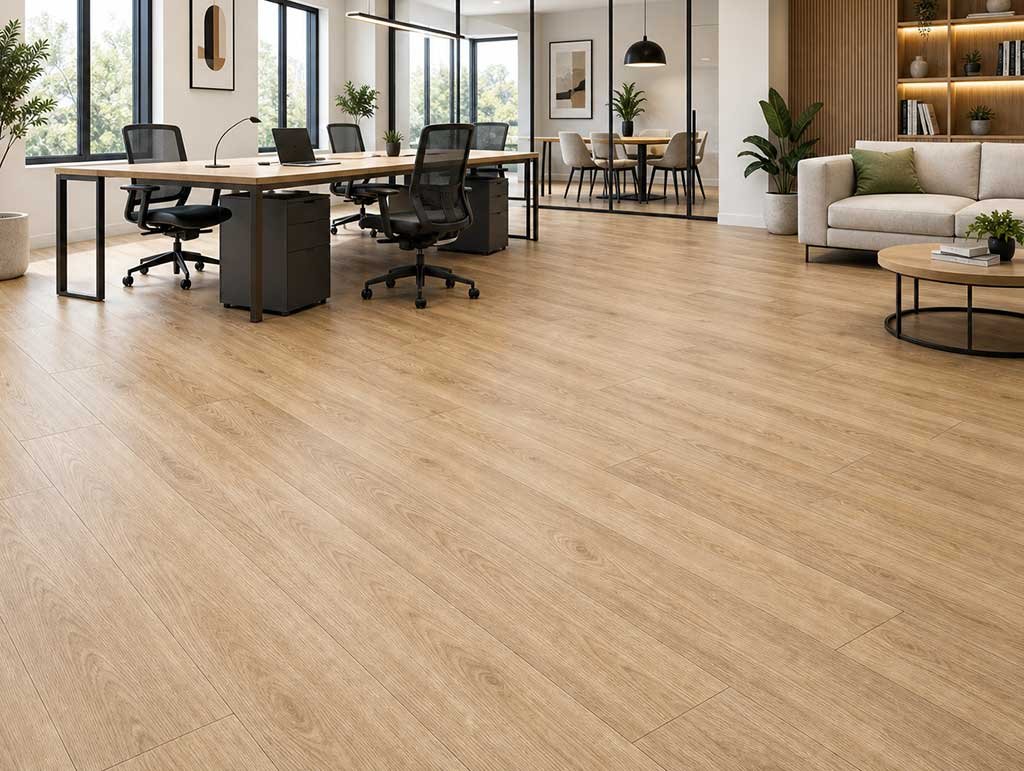
What Is SPC Flooring Core Made Of?
Learn what SPC Core is made of, including PVC resin, calcium carbonate, stabilizers, lubricants, and processing aids.
When choosing a building material, it is important to understand what it is made of. If you are considering SPC flooring, there is one important concept you should understand first:
SPC is not a single material. It is a composite material system.
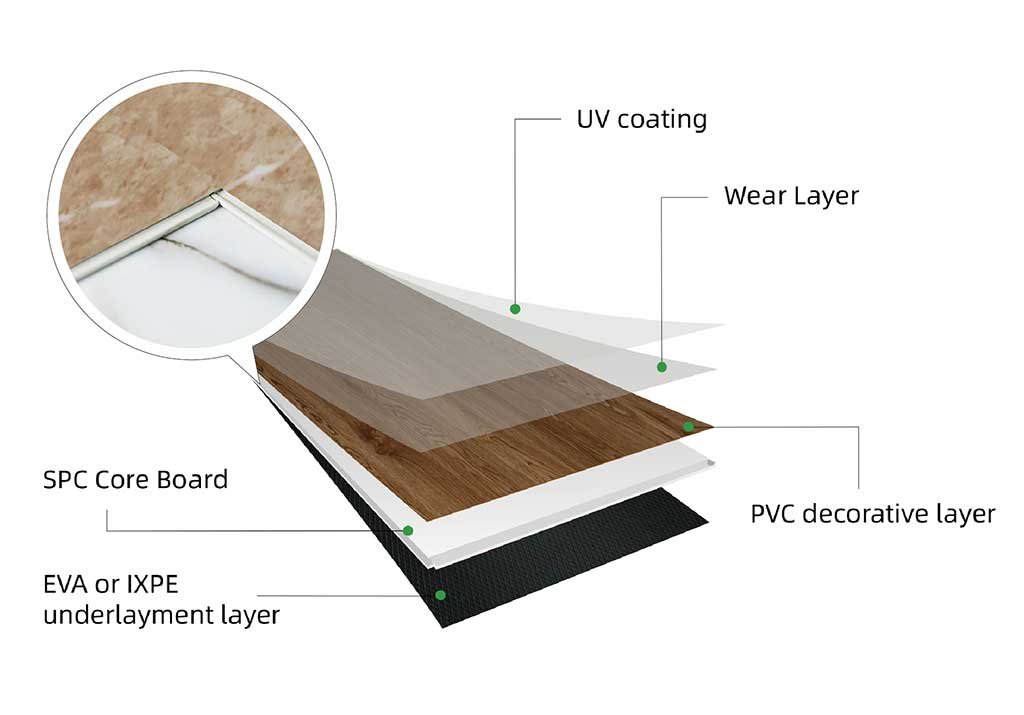
The currently active ASTM F3261-26 covers material, manufacturing, physical, and performance requirements for resilient flooring in modular format with a rigid polymeric core. The standard addresses material systems including binders, fillers, pigments, lubricants, processing aids, plasticizers, and stabilizers.
So, if a supplier tells you:
“Our SPC is 70% calcium carbonate.”
You should not immediately assume that it is a “high-calcium” or “low-quality” product.
Instead, you should ask:
What makes up the remaining 30%? How much PVC is used? How much stabilizer and lubricant? Does it contain recycled material? And how does the finished product perform?
Note: The 70% and 30% figures mentioned above are only examples used to explain the concept and do not represent a standard SPC formulation.
Table of Contents
1. The Five Core Material Components of SPC Core
| Material | Main Function |
|---|---|
| PVC Resin | Provides the polymer matrix, toughness, and processing properties |
| Calcium Carbonate (CaCO₃) | Improves rigidity and affects density and filler content |
| Stabilizer | Improves the thermal stability of PVC during high-temperature processing |
| Lubricant | Improves processing flow and reduces friction and adhesion |
| Processing Aid | Improves plasticization, melting, and processing performance |
Other materials may also be used, including:
- Impact Modifier
- Pigment
- Plasticizer
- Foaming Agent
- Foaming Regulator
- Other functional additives
The exact formulation varies depending on the product structure and manufacturing process. For example, publicly available patents for lightweight foamed SPC include CaCO₃, PVC resin, stabilizers, lubricants, plasticizers, and foaming systems. Such formulations should not be directly treated as representative of conventional SPC.
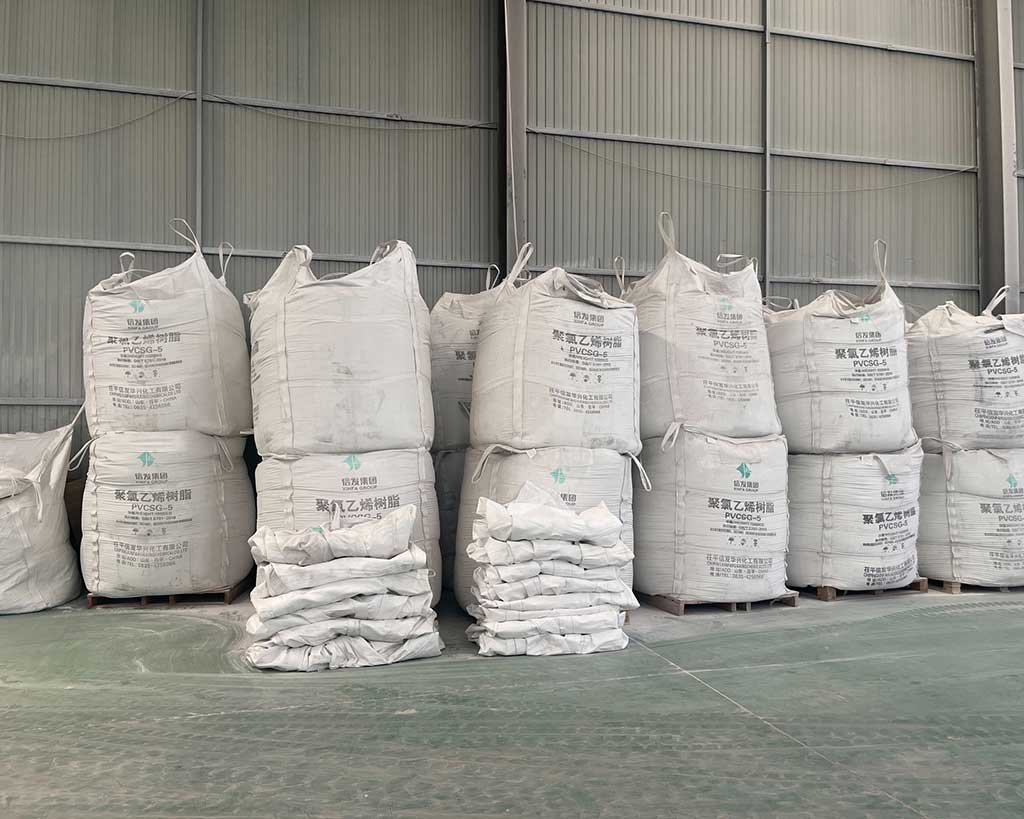
2. What Is PVC Resin?
Polyvinyl Chloride Resin (PVC Resin) is an important polymer material in SPC Core.
It can be simply understood as:
PVC = the “plastic backbone/polymer matrix” of SPC Core
It binds inorganic fillers such as CaCO₃ within the material system while also affecting the material’s toughness and processing performance.
3. Why Does SPC Contain a Large Amount of CaCO₃?
This is one of the important differences between SPC and conventional PVC flooring.
CaCO₃ = Calcium Carbonate
It is generally derived from mineral materials such as limestone.
It mainly contributes in three ways:
① Improving Rigidity
CaCO₃ can increase material rigidity, giving SPC its distinctive Rigid Core structure.
② Adjusting Material Cost
PVC resin is generally more expensive than calcium carbonate, so adding an appropriate amount of CaCO₃ can help adjust the overall material cost.
③ Affecting Density and Mechanical Properties
The CaCO₃ content, particle size, surface treatment, and the overall PVC/additive system can all affect the final flooring performance.
Therefore:
“More calcium carbonate is always better” is incorrect.
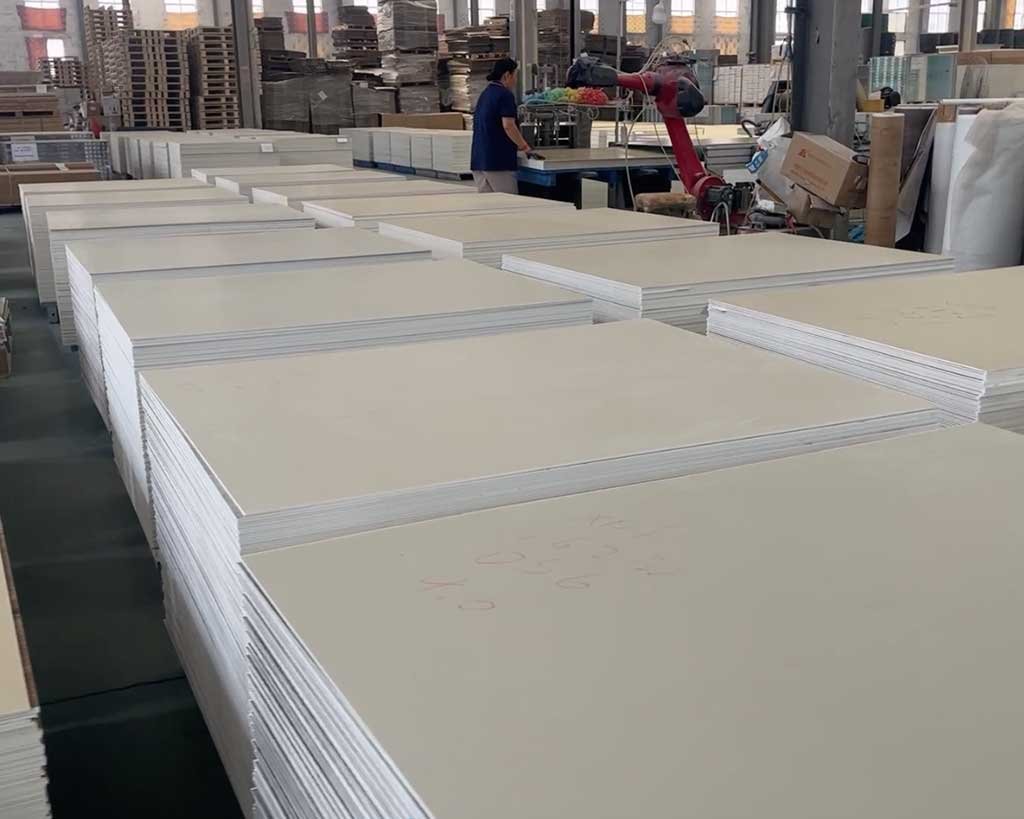
4. Why Can’t CaCO₃ Be Increased Indefinitely?
This is an important issue to understand when purchasing SPC flooring.
Formulation A
More sufficient PVC
Moderate CaCO₃
Under otherwise appropriate conditions, this may provide:
Good toughness + rigidity + click-lock strength
Formulation B
Higher CaCO₃ content
Reduced PVC and other components
If the formulation becomes unbalanced, it may result in:
- Increased material brittleness
- Lower impact resistance
- Easier damage to click-lock edges
- A narrower processing window
- Greater risk of edge chipping
- Potential effects on thermal stability and dimensional stability
Therefore, a professional evaluation should not simply ask:
“How much calcium carbonate is used?”
Instead, ask:
“How are PVC, CaCO₃, and additives balanced, and what are the final test results?”
5. An Important Parameter of CaCO₃: Mesh
Suppliers often mention:
- 325 mesh calcium carbonate
- 400 mesh calcium carbonate
- 800 mesh calcium carbonate
Here:
Mesh = particle fineness
In simple terms, it indicates the fineness of the powder.
Generally:
Higher mesh → finer particles.
For example:
325 mesh is generally coarser than 800 mesh.
However:
800 mesh is not necessarily better than 325 mesh.
SPC formulations may use CaCO₃ with different particle sizes.
For example, some publicly available patent formulations use CaCO₃ with different particle sizes. Different particle sizes can affect:
- Filling efficiency
- Dispersion
- Surface quality
- Melt flow
- Material compactness
- Final mechanical properties
Therefore, if you see:
350 mesh + 800 mesh
there is no reason to consider it unusual.
6. Stabilizer
Stabilizer = Thermal Stabilizer
PVC can undergo thermal degradation during high-temperature processing.
SPC production involves heating, plasticization, and extrusion, so stabilizers are used to help maintain the thermal stability of the PVC system.
A common system is:
Ca-Zn Stabilizer
or:
Calcium-Zinc Stabilizer
7. Lubricant
Lubricant = Lubricant
The name can be misleading.
It does not mean that it makes the flooring surface “more slippery.” Instead, lubricants are mainly used to:
- Improve material processing
- Reduce friction
- Improve melt flow
- Reduce adhesion
- Improve release from processing equipment
A common example is:
PE Wax (Polyethylene Wax)
Other systems may include:
Internal Lubricant
and
External Lubricant
These two types do not have exactly the same function in PVC processing.
8. Processing Aid
Processing Aid = Processing Aid
Its main purpose is:
To make the PVC system easier to plasticize and process.
It can help with:
- PVC plasticization
- Melting
- Mixing
- Dispersion
- Extrusion stability
You can simply remember it this way:
Stabilizer
Helps address thermal stability during PVC processing.
Lubricant
Improves friction, flow, and release during processing.
Processing Aid
Helps the PVC system plasticize, melt, and process more effectively.
9. An Important Misunderstanding
When communicating with SPC factories, you may encounter terms such as:
- Virgin Material
- 100% Virgin Material
- Recycled Material
- Mixed Material
- High Calcium Formula
- Low Calcium Formula
These terms require further clarification.
Virgin Material
Virgin Material = material that has not previously been recycled or reused.
However, keep in mind:
“100% Virgin PVC Resin” does not necessarily mean that the entire SPC Core is made from 100% virgin material.
These are not exactly the same concept.
Recycled Material
Recycled Material = recycled or recovered material
It may come from:
- Production scrap
- Non-conforming products
- Internally recycled factory material
- Other sources of recycled material
The key is not to simply assume:
“Recycled material = poor quality.”
Instead, pay attention to:
The source, proportion, processing method, and final product performance of the recycled material.
10. Professional SPC Purchasing Should Not Focus Only on Formulation
Suppose two factories give you the following formulations:
Factory A
PVC 25%
CaCO₃ 70%
Factory B
PVC 30%
CaCO₃ 65%
You cannot simply conclude that Factory B is better than Factory A.
Because you still do not know:
- CaCO₃ particle size
- PVC resin grade
- Stabilizer system
- Lubricant system
- Processing aids
- Whether recycled material is used
- Density
- Impact resistance
- Dimensional stability
- Click-lock strength
- Residual indentation
- Surface performance
ASTM F3261-26 covers not only material systems but also requirements related to dimensions, thickness, flatness, residual indentation, dimensional stability, chemical resistance, heat resistance, light resistance, and static load performance.
Therefore, professional SPC purchasing should move from asking:
“Is this formulation good?”
to:
“Can this formulation consistently produce a product that meets the required performance specifications?”
This is a more meaningful way to evaluate SPC Core quality.
FAQ
1. What is SPC Core made of?
SPC Core mainly consists of PVC resin, calcium carbonate, stabilizers, lubricants, and processing aids. Depending on the product formulation, other additives such as impact modifiers, pigments, plasticizers, or foaming agents may also be used.
2. What does PVC resin do in SPC Core?
PVC resin provides the polymer matrix of SPC Core. It helps bind calcium carbonate and other components together while contributing to toughness and processing performance.
3. Does more calcium carbonate make SPC flooring better?
Not necessarily. Calcium carbonate can increase rigidity and affect density, but excessive filler may reduce toughness and impact resistance if the overall formulation is not properly balanced.
4. What does calcium carbonate mesh size mean in SPC Core?
Mesh size generally indicates particle fineness. For example, 800 mesh calcium carbonate is generally finer than 325 mesh. Particle size can affect dispersion, filling efficiency, surface quality, melt flow, and mechanical properties.
5. How should buyers evaluate an SPC Core formulation?
Buyers should look beyond PVC and calcium carbonate ratios. Important factors include raw material quality, particle size, additives, recycled material content, density, impact resistance, dimensional stability, click-lock strength, and final product test results.