Acoustic Panels: Balancing Acoustic Performance and Decorative Design
Modern acoustic panels reduce sound reflections while adding functional and decorative value to offices, homes, and public spaces.
Modern interior spaces are designed not only to look attractive but also to provide a comfortable and functional environment. Offices need clear communication during meetings, restaurants need to provide a comfortable atmosphere for conversation, recording studios need to control sound reflections, and home theaters require a more focused listening environment.
However, many modern interiors use large areas of glass, concrete, metal, tiles, and other hard surfaces. Although these materials create a clean and contemporary appearance, they can also produce strong sound reflections, resulting in echoes, excessive reverberation, and reduced speech intelligibility.
Table of Contents
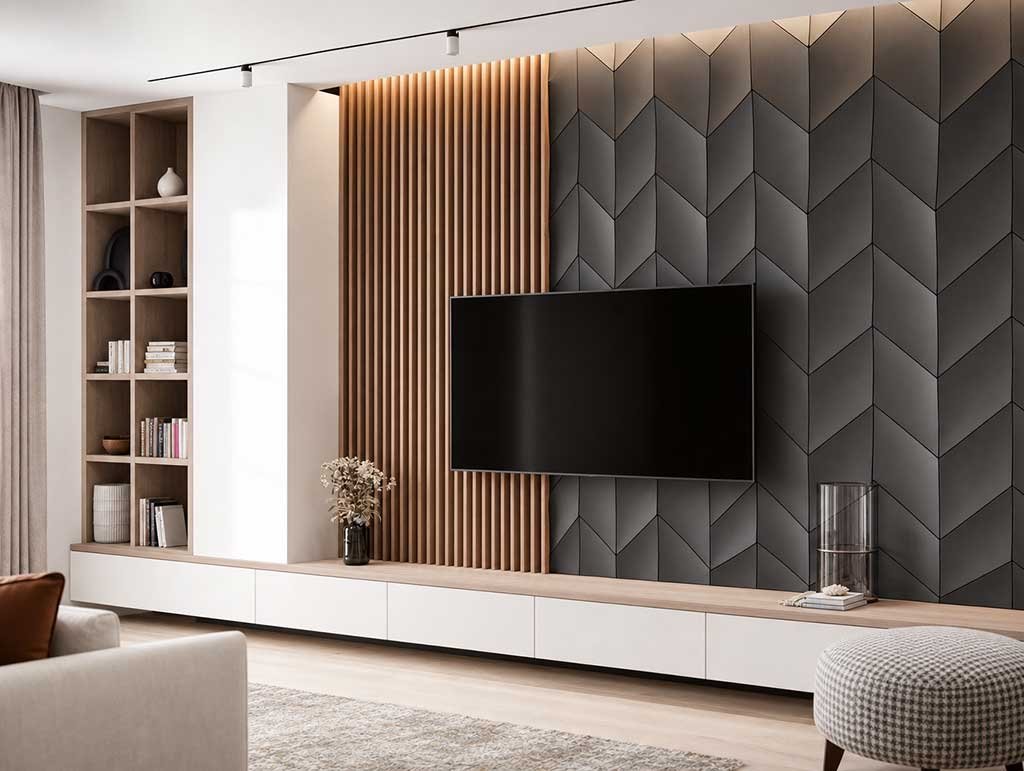
Acoustic panels provide a practical way to address these issues while combining acoustic performance with interior design. Today, acoustic panels are no longer simply functional materials hidden inside walls. With wood finishes, different colors, textures, and installation patterns, they can become an integral part of the interior design.
Therefore, when selecting acoustic panels, appearance should not be the only consideration. Space function, acoustic performance, installation location, material type, and overall design style should all be taken into account.
Why Is the Acoustic Environment Becoming More Important in Interior Design?
The acoustic environment can directly affect how people experience and use a space.
In offices, excessive sound reflections may reduce speech clarity during meetings and video conferences. In restaurants, excessive reverberation can make conversations more difficult. In home theaters, recording studios, and other specialized spaces, uncontrolled sound reflections can also affect the overall listening experience.
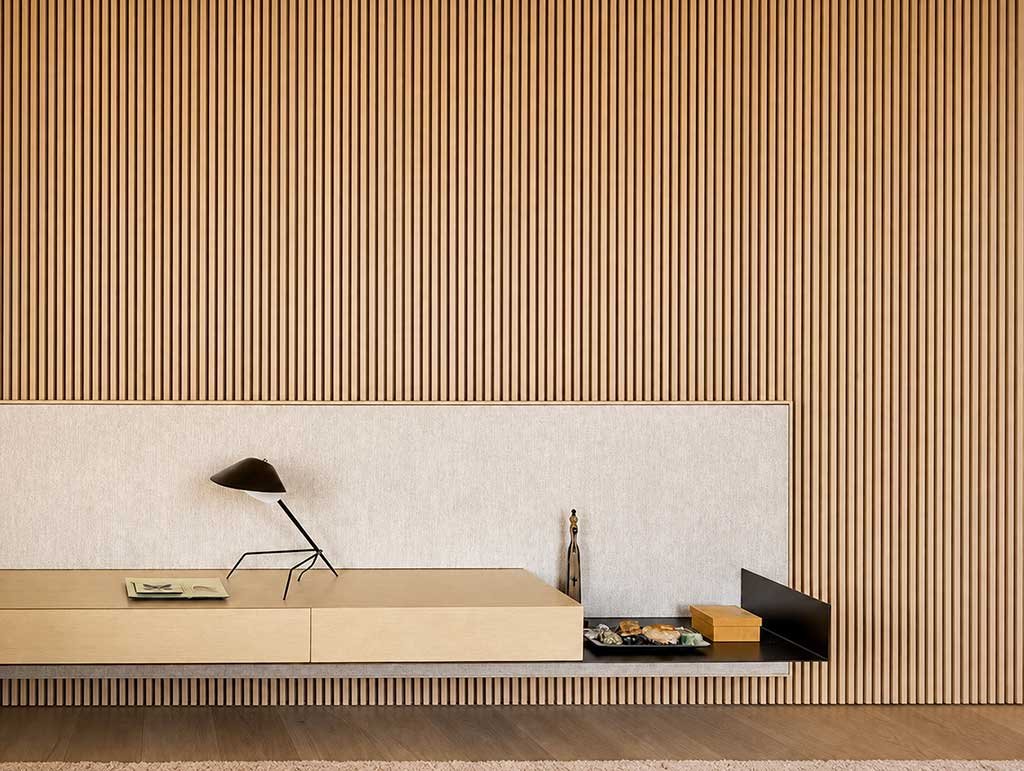
A noisy acoustic environment may also affect comfort, communication, concentration, and productivity. The U.S. Environmental Protection Agency (EPA) has noted that environmental noise may be associated with speech interference, sleep disturbance, stress-related effects, and reduced productivity.
As a result, acoustic design is no longer limited to professional recording studios. It is increasingly being incorporated into offices, hotels, restaurants, homes, schools, and other public spaces.
The primary purpose of acoustic panels is to absorb part of the sound energy that would otherwise be reflected between walls, ceilings, and other hard surfaces. The goal is generally not to make a room completely silent, but to reduce unwanted sound reflections and create a more comfortable acoustic environment.
Why Can Some Spaces Look Beautiful but Sound Uncomfortable?
Modern interior design often incorporates glass, concrete, stone, metal, tiles, and painted walls. These materials can create a clean and open visual effect, but large areas of hard surfaces can also increase sound reflection.
When sound repeatedly reflects between different surfaces, a space may experience:
- Noticeable echoes
- Excessive reverberation
- Reduced speech intelligibility
- A harsh or noisy acoustic environment
- Listening fatigue during long conversations
This is why a visually attractive interior does not necessarily have good acoustic performance.
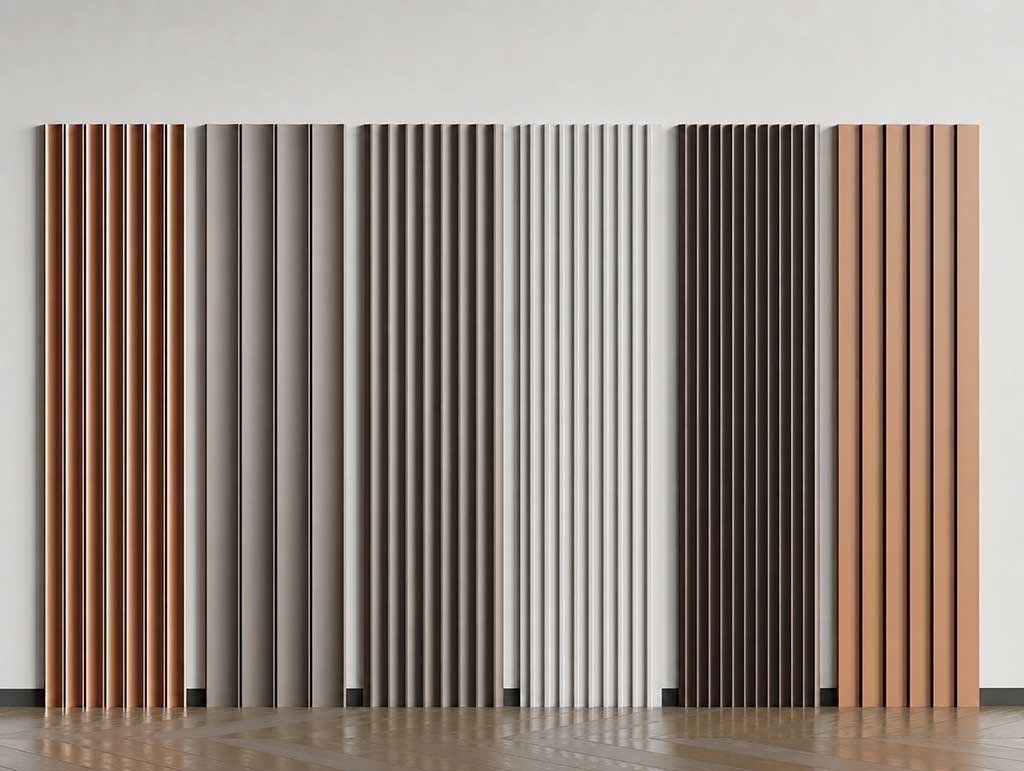
Decorative acoustic panels can help address this conflict. For example, wood slat acoustic panels, polyester acoustic panels, fabric acoustic panels, and perforated acoustic panels can provide sound absorption while complementing different interior design styles.
For this reason, acoustic panels are best considered as part of the overall interior design from the early planning stage rather than as a functional material added only after the decoration is completed.
What Is the Difference Between Sound Absorption and Soundproofing?
This is one of the most common points of confusion when purchasing and specifying acoustic materials.
Sound absorption and soundproofing / sound isolation are not the same thing.
Soundproofing or sound isolation primarily addresses the transmission of sound from one space to another. It generally requires consideration of wall construction, material mass, doors and windows, sealing of gaps, and the overall building structure.
Acoustic panels, on the other hand, are mainly used to improve the acoustic environment inside a room by absorbing part of the reflected sound and helping reduce reverberation and echoes.
ASTM C423 is a standard test method used to measure the sound absorption performance of materials. The test evaluates sound absorption in a reverberation room and can provide useful reference data when comparing different acoustic materials.
For example, if the goal is to reduce traffic noise entering an office from outside, acoustic panels alone cannot replace a proper sound isolation system.
However, if the main problem in a meeting room is poor speech intelligibility caused by excessive sound reflections, acoustic panels can be an important part of the acoustic treatment.
What Problems Can Acoustic Panels Help Address?
The value of acoustic panels is not limited to their decorative appearance. Their primary function is to improve the acoustic environment inside a space.
Depending on the room and installation method, acoustic panels can help:
- Reduce echoes and excessive reverberation
- Improve speech intelligibility
- Improve the listening experience during meetings and everyday communication
- Create a more comfortable environment for conversations in restaurants and other public spaces
- Improve sound control in recording studios and home theaters
- Add texture and visual depth to walls
- Help define open-plan areas through different panel arrangements
The World Health Organization (WHO) has also published guidelines covering environmental noise from different sources, demonstrating that acoustic environments are an important consideration in building environments, health, and comfort planning.
For commercial spaces, a well-designed acoustic environment can also contribute to the overall user experience. A quieter hotel lobby, a restaurant where customers can communicate more easily, or an office with clearer meeting conversations can all improve the practical usability of the space.
Where Are Acoustic Panels Suitable for Use?
Different spaces have different functional requirements. Therefore, acoustic panel materials, installation locations, and coverage areas should not necessarily be the same for every project.
Offices and Meeting Rooms
In offices, acoustic panels can be installed around workstations, in meeting rooms, reception areas, and open collaboration spaces.
The main purpose is to reduce unwanted sound reflections and improve speech clarity during meetings and everyday communication.
Restaurants and Cafés
Restaurants often contain a combination of hard surfaces, including walls, floors, tables, glass, and other materials. When a restaurant is busy, sound can repeatedly reflect between these surfaces, making conversations more difficult.
Wood slat acoustic panels are commonly used in these environments because they can contribute to acoustic treatment while adding natural wood textures and warmth to the interior.
Home Theaters
Home theaters require appropriate control of sound reflections to create a more focused listening experience.
Depending on the room layout, acoustic panels can be installed on side walls, rear walls, or selected ceiling areas. The specific locations should be determined based on the room structure and audio system.
Recording Studios and Podcast Rooms
Recording studios and podcast rooms generally require more detailed acoustic treatment.
In addition to sound absorption, these spaces may also require sound diffusion and low-frequency control. Therefore, they should not simply be treated according to the principle that “more wall coverage is always better.”
Hotels, Libraries, and Educational Spaces
Hotels, libraries, classrooms, and certain healthcare, wellness, and recreational spaces can also benefit from acoustic materials.
These environments often place greater emphasis on quietness, comfort, and clear communication or learning conditions.
It is important to remember that different buildings have different acoustic requirements. Acoustic treatment should therefore be designed according to the specific characteristics and functions of each space rather than applying exactly the same solution everywhere.
How to Choose Acoustic Panels That Combine Design and Performance?
When selecting acoustic panels, the first step should be to identify the acoustic problem that needs to be addressed, rather than choosing a color from a product catalog.
1. Identify the Acoustic Problem First
First determine what the main problem is:
- Is there excessive echo?
- Is the reverberation time too long?
- Is speech intelligibility poor?
- Is greater speech privacy required?
- Are unwanted sound reflections affecting music listening?
- Is the overall acoustic environment uncomfortable?
Different problems may require different materials, installation methods, and coverage areas.
2. Choose the Material According to the Space
Different acoustic panel materials offer different visual and functional characteristics.
Polyester acoustic panels are generally lightweight and can be produced in a wide range of colors and shapes, making them suitable for many interior design applications.
Wood slat acoustic panels can add natural textures and warmth while providing sound absorption when designed with an appropriate acoustic backing structure.
Fabric acoustic panels can integrate well into offices, hotels, and other commercial interiors.
Perforated acoustic panels can be suitable for projects that place greater emphasis on architectural aesthetics and integrated design.
3. Consider the Panel Arrangement
Acoustic panels do not necessarily need to cover an entire wall.
Depending on the design concept, they can be installed as:
- Feature walls
- Vertical linear arrangements
- Partial wall treatments
- Modular combinations
- Suspended ceiling panels
- Geometric patterns
This approach allows acoustic materials to serve both an acoustic function and a decorative purpose.
4. Check Actual Performance Data
Appearance should not be the only factor when purchasing acoustic panels.
Where available, buyers can request:
- Sound absorption test data
- Product thickness
- Backing or substrate materials
- Installation methods
- Fire performance documentation
- Cleaning and maintenance requirements
It is important to understand that acoustic performance does not depend solely on the surface material. Panel thickness, backing structure, air gaps behind the panels, installation method, and total coverage area can all affect the final acoustic performance.
Conclusion
Acoustic panels are more than functional materials used to cover walls. In modern interior design, they can serve both acoustic treatment and decorative design purposes.
By selecting appropriate wood slat acoustic panels, polyester acoustic panels, fabric acoustic panels, or perforated acoustic panels, and combining them with suitable installation locations and coverage areas, designers can help reduce unwanted sound reflections, improve speech intelligibility, and create a more comfortable interior environment.
For offices, restaurants, hotels, recording studios, home theaters, and other commercial and residential spaces, acoustic treatment should ideally be considered during the early stages of interior planning.
When acoustic performance and visual design are planned together, acoustic panels can become an integral part of the interior rather than simply a functional material added at a later stage.
Frequently Asked Questions
1. Are acoustic panels and soundproofing materials the same thing?
No. Acoustic panels are primarily used to reduce sound reflections and reverberation inside a room, while soundproofing focuses on reducing sound transmission from one space to another. They serve different purposes and require different solutions.
2. Can acoustic panels really improve the sound quality of an indoor space?
Yes. Properly selected and installed acoustic panels can absorb part of the reflected sound and help reduce excessive reverberation. However, the final result also depends on the panel type, installation location, coverage area, room structure, and other factors.
3. Which acoustic panels are suitable for modern interior design?
The choice depends on the function of the space and the desired design style. Wood slat acoustic panels, polyester acoustic panels, fabric acoustic panels, and perforated acoustic panels can all be used in modern interiors, but they differ in appearance, construction, and acoustic performance.
4. Where should acoustic panels be installed?
The installation location should be determined according to the room structure, sound sources, occupied areas, and major reflective surfaces. There is no single installation method that is suitable for every space.
5. Can acoustic panels also be used as decorative materials?
Yes. Modern acoustic panels are available in a wide range of colors, textures, materials, and shapes. They can be designed as feature walls, decorative linear elements, ceiling treatments, or modular patterns, allowing them to improve the acoustic environment while contributing to the overall interior design.