MCM Soft Stone: A Detailed Guide to Eco-Friendly Raw Materials
MCM soft stone combines mineral fillers, acrylic polymers, pigments, and fiberglass for flexible, lightweight decoration.
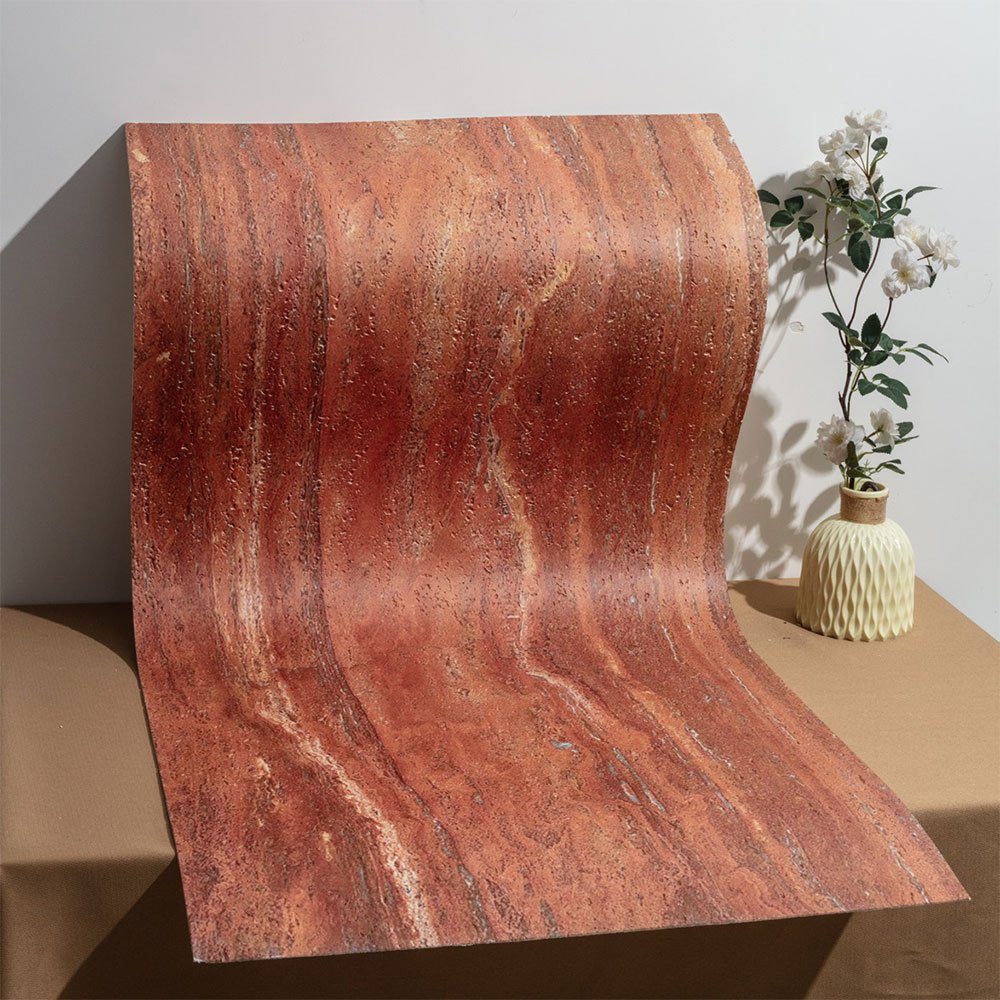
MCM Soft Stone is a flexible decorative material based on inorganic mineral fillers and a polymer binder system. Unlike natural stone, which is cut directly from quarried stone into thin slabs, MCM Soft Stone is a composite material engineered from mineral fillers, polymer binders, pigments, reinforcement materials, and other functional additives to reproduce the appearance and texture of natural stone.

From a material composition perspective, MCM Soft Stone formulations can be adjusted according to different product requirements. Mineral fillers mainly provide texture, hardness, and structural support. The polymer binder system bonds the mineral particles together while contributing to material flexibility. Reinforcement layers improve tensile and crack resistance, while pigments create different stone, brick, and wood-grain effects.
Because manufacturers use different material systems, raw material sources, production processes, and performance requirements, there is no single fixed formulation that applies to all MCM Soft Stone products. For engineering and material procurement, it is more important to understand the function of each raw material and evaluate the final product through verified performance data and test reports.
Table of Contents
1. Mineral Fillers: The Main Structural Component
Mineral fillers generally account for a significant portion of MCM Soft Stone formulations. They form the main body of the material and influence its density, surface texture, hardness, color, and processing characteristics.
Calcium Carbonate (CaCO₃)
Calcium carbonate is one of the most common inorganic mineral fillers used in decorative building materials. It can be sourced from natural limestone, calcite, and other calcium carbonate minerals.
In Soft Stone formulations, calcium carbonate is mainly used to:
- Provide the basic mineral framework;
- Adjust material density and hardness;
- Improve surface texture;
- Help optimize material cost in certain formulations;
- Form a stable composite structure with the polymer binder system.
The particle size, purity, and particle-size distribution of calcium carbonate can affect the final product performance. Fine powders can help produce a more uniform surface, while combinations of different particle sizes can improve packing efficiency and processing characteristics.
Silica / Quartz Powder (SiO₂)
Quartz powder is generally produced by crushing, grinding, and classifying natural quartz or silica sand. Its main chemical component is silicon dioxide (SiO₂).
In composite decorative materials, silica can be used to:
- Increase hardness and wear resistance;
- Adjust surface texture;
- Improve dimensional stability;
- Modify the tactile and visual characteristics of the finished product.
The amount and particle size of silica should be adjusted according to product thickness, flexibility requirements, and processing conditions. Excessive mineral filler content may increase rigidity, while excessive polymer content can affect hardness, dimensional stability, and production cost. A balanced formulation is therefore essential.
Other Inorganic Mineral Powders
Depending on the product type and manufacturer’s formulation, other natural or processed mineral powders may also be used, including silicate-based minerals, natural rock powders, and specially treated inorganic fillers.
These materials can be used to adjust:
- Color;
- Texture;
- Density;
- Surface roughness;
- Mechanical properties;
- Processing characteristics.
Therefore, the term “Soft Stone” does not mean that all products use exactly the same mineral system.
2. Polymer Binders: A Key Component for Flexibility
Mineral powders alone cannot form a continuous flexible sheet. A polymer binder system is therefore required to bind the mineral particles together and create a cohesive composite structure.
Common systems include water-based acrylic polymer emulsions, acrylic copolymers, and other polymer systems suitable for architectural decorative materials.
Acrylic Polymer
Acrylic polymers typically act as the continuous binding phase between mineral particles.
Their main functions include:
- Binding mineral fillers into a continuous material;
- Improving internal cohesion;
- Enhancing material flexibility;
- Improving adhesion to substrates;
- Contributing to water resistance and weatherability.
Some water-based polymer systems can be formulated with low VOC content or without APEO to meet different environmental requirements in various markets.
It is important to note that flexibility is not determined by the polymer alone. Polymer type, glass transition temperature (Tg), filler-to-polymer ratio, degree of crosslinking, sheet thickness, and reinforcement structure can all influence the final bending performance.
3. Pigments: Creating Stone, Brick, and Wood-Grain Effects
MCM Soft Stone relies on pigments and surface-texturing processes to create different decorative finishes.
Common inorganic pigments include:
Iron Oxide Pigments
Iron oxide pigments offer good weather resistance and color stability and are widely used in construction materials, concrete, bricks, tiles, and decorative products.
Common colors include:
- Iron oxide red;
- Iron oxide yellow;
- Iron oxide black;
- Iron oxide brown.
By adjusting pigment proportions and surface treatment processes, manufacturers can create visual effects resembling natural stone, decorative brick, sandstone, slate, and other textured finishes.
Compared with certain organic dyes, inorganic iron oxide pigments generally provide good lightfastness and weather resistance. However, actual color stability still depends on the complete formulation and verified product test results.
4. UV Stabilizers and Weathering Additives
Soft Stone products designed for exterior building facades need to withstand long-term exposure to ultraviolet radiation, temperature and humidity changes, and rainfall.
Some formulations may therefore contain:
- UV stabilizers;
- Light stabilizers;
- Weathering additives.
These additives are mainly used to reduce the effects of UV radiation on the polymer system and color stability, helping improve long-term weathering performance in outdoor environments.
However:
The use of UV stabilizers does not mean that a product will never fade.
Actual weathering performance also depends on the polymer system, pigment type, surface treatment, product thickness, and climatic conditions. For exterior wall applications, buyers should therefore prioritize accelerated weathering tests, weather-resistance data, or relevant outdoor performance test reports.
5. Reinforcement Materials: Fiberglass Mesh
For Soft Stone products requiring higher crack resistance and dimensional stability, fiberglass mesh may be incorporated as a reinforcement layer during production.
Fiberglass reinforcement can:
- Increase tensile strength;
- Reduce the risk of cracking;
- Improve dimensional stability;
- Reinforce thin sheet structures;
- Help the material withstand mechanical stress during transportation and installation.
Fiberglass mesh is generally embedded within the polymer-mineral composite structure rather than simply attached to the surface of the finished product.
Its performance depends on factors such as fiberglass type, yarn density, mesh size, coating treatment, and resin impregnation.
For exterior wall products, the reinforcement structure deserves particular attention because thin flexible decorative materials may experience tensile stress and deformation during transportation, installation, and long-term temperature and humidity changes.
6. Flame-Retardant Systems
Some MCM Soft Stone products may incorporate flame-retardant components or use formulations with a relatively high proportion of inorganic fillers according to the fire-safety requirements of specific building projects.
Depending on the formulation, flame-retardant systems may include inorganic flame-retardant fillers and other flame-retardant additives compatible with polymer materials.
However, it is important to understand that:
The addition of a flame retardant does not automatically determine a specific fire rating.
For example:
- ASTM E84 Class A;
- EN 13501-1 Classes A1 and A2;
- Chinese fire-performance classifications for building materials;
belong to different testing and classification systems.
Therefore, product specifications should not simply state that adding a flame retardant makes a product compliant with ASTM E84 Class A or an A1 rating.
A more accurate statement is:
The formulation can be designed to improve fire performance, while the final fire rating depends on the complete product system and verified test results.
In other words, the final fire classification should be based on test reports for the finished product, rather than inferred solely from the presence of a particular flame-retardant component.
7. Water-Based Systems and Environmental Performance
MCM Soft Stone can be manufactured using water-based polymer systems. Compared with certain traditional solvent-based systems, water-based formulations can help reduce VOC emissions during manufacturing and use.
Environmental performance can be influenced by:
- Polymer type;
- VOC content;
- Use of potentially hazardous solvents;
- Adhesive and binder systems;
- Pigment type;
- Plasticizers and other additives;
- Manufacturing processes;
- Formaldehyde and other emissions from the finished product.
Therefore, the environmental performance of a product cannot be determined simply by the use of “natural mineral powders.”
For residential, hotel, school, hospital, and other interior applications, it is more reliable to review finished-product testing such as:
- VOC testing;
- Formaldehyde emission testing;
- Indoor air quality testing;
- Relevant environmental certifications.
8. Why Can MCM Soft Stone Be Both Lightweight and Flexible?
Traditional stone generally has a relatively high density, making transportation, cutting, and installation more demanding in terms of equipment and labor.
MCM Soft Stone uses a composite structure consisting of:
Mineral fillers + polymer binder system + reinforcement materials + thin-sheet construction
This creates a material structure that differs fundamentally from conventional stone.
Mineral fillers provide hardness and stone-like texture, while the polymer forms a continuous binding phase. Reinforcement materials improve structural stability, and the relatively thin construction helps reduce overall weight.
As a result, MCM Soft Stone can offer a combination of:
- Lightweight
- Flexible
- Thin
- Textured
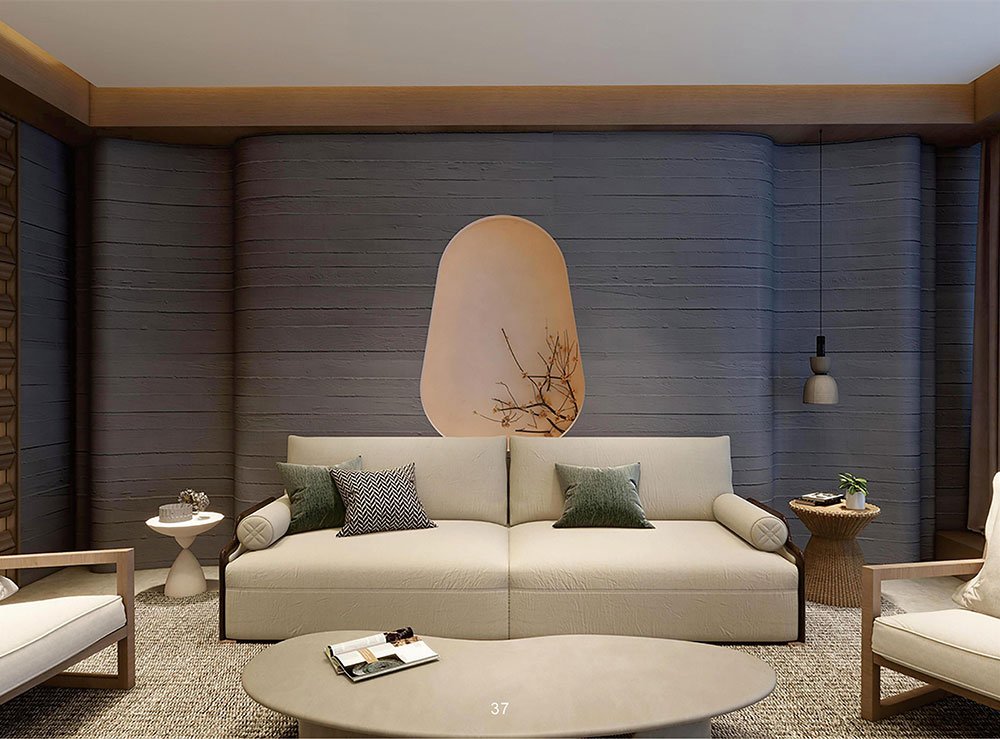
These characteristics make it suitable for certain areas where traditional rigid stone can be difficult to install, including curved walls, columns, arched decorative surfaces, and selected irregular substrates.
However, “flexible” does not mean that the material can be bent without limits. The actual bending radius depends on the formulation, thickness, reinforcement structure, and installation method.
9. Typical Material Structure of MCM Soft Stone
From a functional perspective, MCM Soft Stone can be understood as a multi-component composite system:
| Material Category | Typical Material | Main Function |
|---|---|---|
| Mineral Filler | Calcium Carbonate (CaCO₃) | Provides the main structure, texture, and hardness |
| Siliceous Filler | Silica / Quartz (SiO₂) | Adjusts hardness, texture, and dimensional stability |
| Polymer Binder | Acrylic Polymer / Acrylic Copolymer | Binds mineral particles and contributes to flexibility |
| Reinforcement | Fiberglass Mesh | Improves tensile and crack resistance |
| Inorganic Pigments | Iron Oxide Pigments | Provides base colors |
| UV Additives | UV Stabilizers | Improves resistance to UV aging |
| Flame-Retardant Components | Mineral / Polymer-Compatible Flame Retardants | Helps improve fire performance according to formulation requirements |
| Other Additives | Dispersants, Defoamers, Rheology Modifiers, etc. | Improves mixing, dispersion, forming, and production stability |
Different manufacturers may adjust the proportions of mineral fillers, polymers, reinforcement materials, and functional additives according to their target performance. Therefore, the structure above should not be interpreted as a standardized industry formulation.
Conclusion
MCM Soft Stone is not simply “stone powder mixed with glue.” It is a composite decorative material consisting of mineral fillers, polymer binder systems, reinforcement materials, pigments, and functional additives.
Mineral fillers determine the basic structure and stone-like texture, while the polymer system influences bonding performance and flexibility. Fiberglass mesh improves structural stability, pigments create different decorative effects, and UV stabilizers, flame-retardant components, and other functional additives can be incorporated to modify specific performance characteristics.
For architectural projects, the most important consideration is not simply the name of an individual raw material, but the relationship between the complete formulation, manufacturing process, finished-product performance, and third-party test results. These factors provide a more reliable basis for determining whether MCM Soft Stone is suitable for exterior walls, interior decoration, curved surfaces, and commercial spaces.
FAQ
1. What Are the Main Raw Materials Used in MCM Soft Stone?
MCM soft stone is mainly made from calcium carbonate (CaCO₃), silica/quartz (SiO₂), polymer binders, inorganic pigments, UV stabilizers, and fiberglass mesh. The formulation and proportions may vary among manufacturers.
2. What Role Does Calcium Carbonate Play in MCM Soft Stone?
Calcium carbonate is a commonly used inorganic mineral filler in MCM soft stone. It provides the basic structure, density, hardness, and stone-like texture of the material, while also helping optimize material cost and processing performance.
3. Why Is MCM Soft Stone Flexible?
MCM soft stone has a composite structure consisting of mineral fillers, a polymer binder system, and reinforcement materials. The polymer binder forms a continuous binding phase and contributes to flexibility, while the fiberglass mesh improves tensile strength, crack resistance, and flexible structural support, allowing the product to bend within a certain range.
4. Can MCM Soft Stone Be Used on Exterior Walls?
Yes. MCM soft stone can be used for building facades, villas, hotels, commercial buildings, and exterior wall renovation projects. For outdoor applications, factors such as weather resistance, water absorption, freeze-thaw resistance, dimensional stability, and the complete wall installation system should be carefully considered. Relevant test data should also be reviewed according to project requirements.
5. Does MCM Soft Stone Have Fire-Resistant Properties?
The fire performance of MCM soft stone depends on its complete material formulation, mineral filler content, polymer system, and manufacturing process. Some products can be formulated to improve fire performance, but the specific fire rating must be verified through third-party testing of the finished product and should not be determined solely from its raw materials.