Decorative Film Lamination Process for WPC Profiles
Learn how decorative film lamination adds colors, patterns, and textures to WPC profiles through a controlled finishing process.
Decorative film lamination is a common surface finishing process for WPC profiles. After the WPC core is extruded and calibrated, a decorative film can be laminated onto its surface to create different colors, wood grain patterns, stone patterns, textures, and other surface effects.
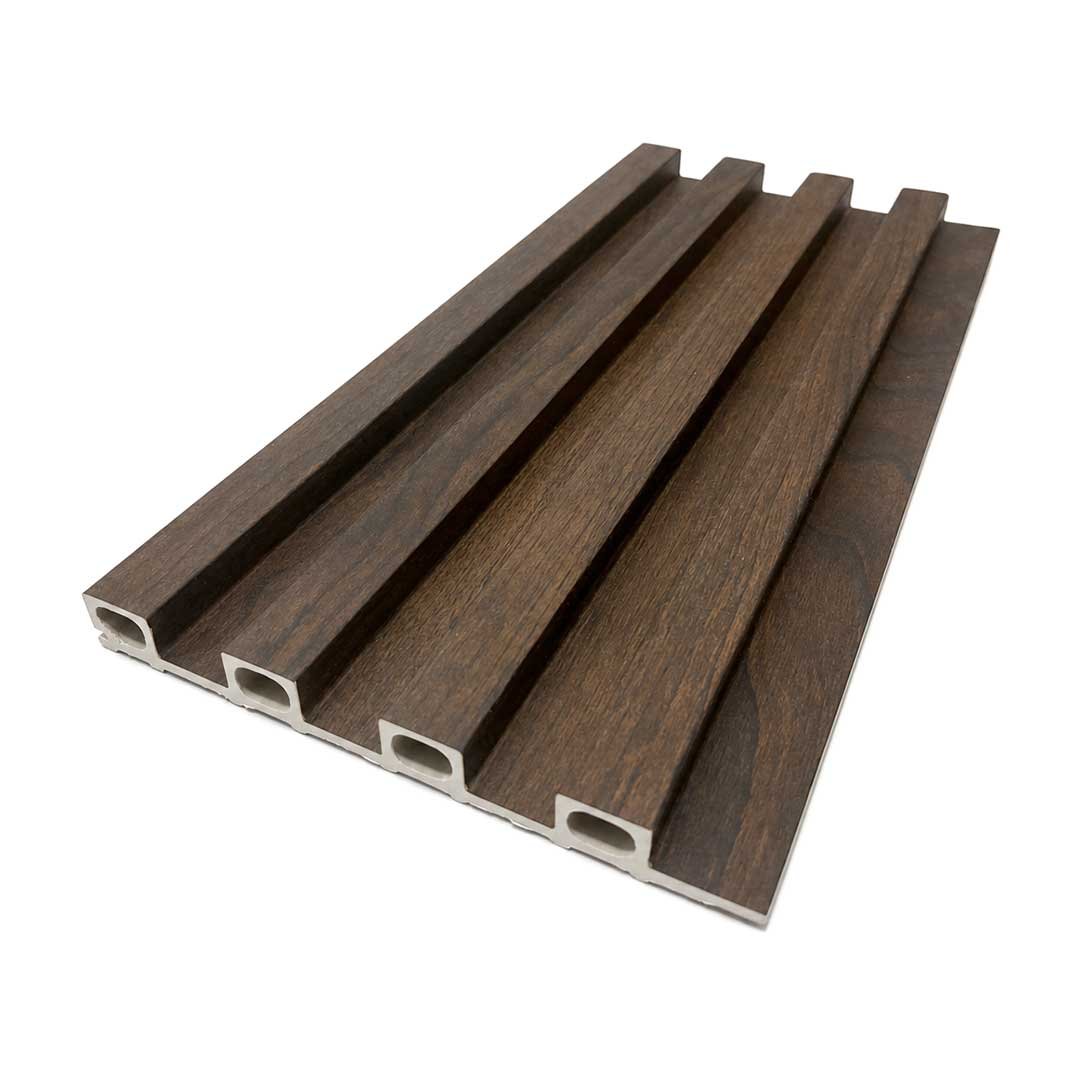
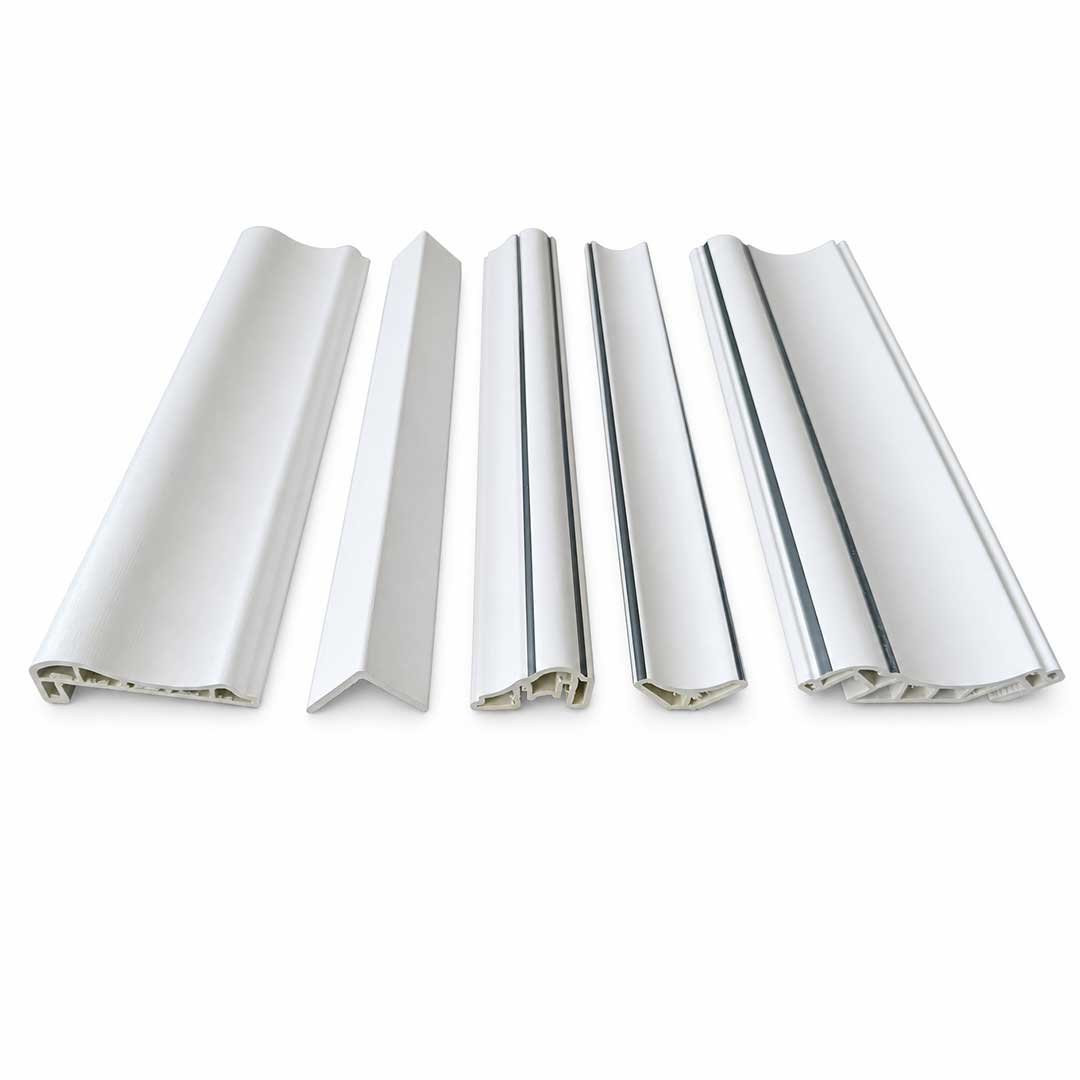
Film lamination provides more surface finishing options for WPC wall panels, trims, skirting boards, edge trims, inside corner profiles, and other decorative products while maintaining the basic structure and dimensional stability of the WPC core.
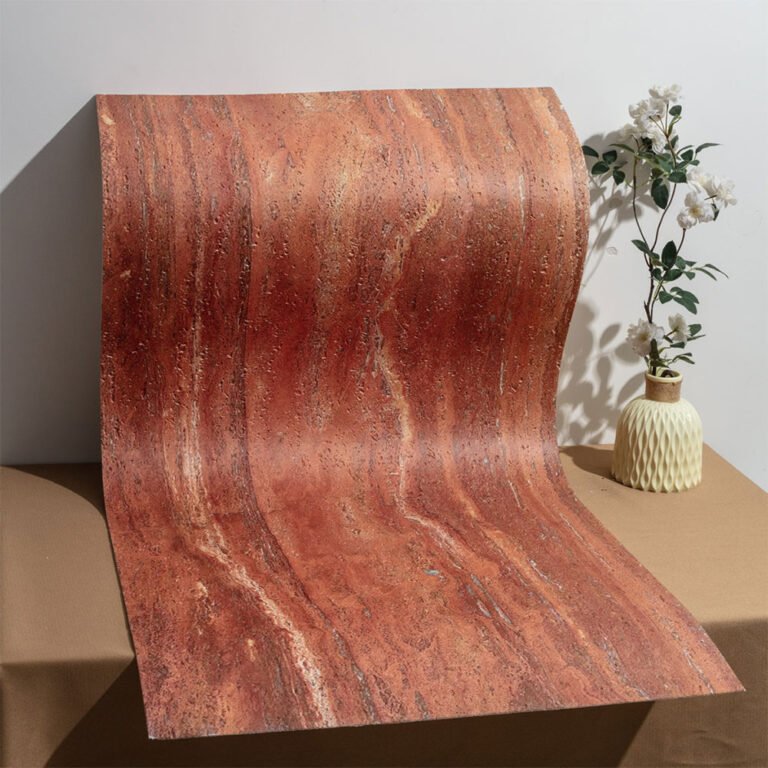
Depending on the product application and design requirements, different types of decorative films can be selected to create wood grain, stone, solid colors, fabric textures, matte finishes, and other decorative effects.
What Decorative Films Are Commonly Used for WPC Profiles?
The selection of decorative film mainly depends on the product application, desired surface appearance, durability requirements, and lamination process.
Common decorative film materials include:
- PVC decorative film
- PET decorative film
- PP decorative film
- Other polymer-based decorative films
Decorative films can be printed with different wood grain, stone, solid-color, and other patterns.
Some decorative films may also include additional protective layers to improve properties such as scratch resistance and UV resistance.
The specific film structure and performance should be selected according to the intended application and service environment of the final product.
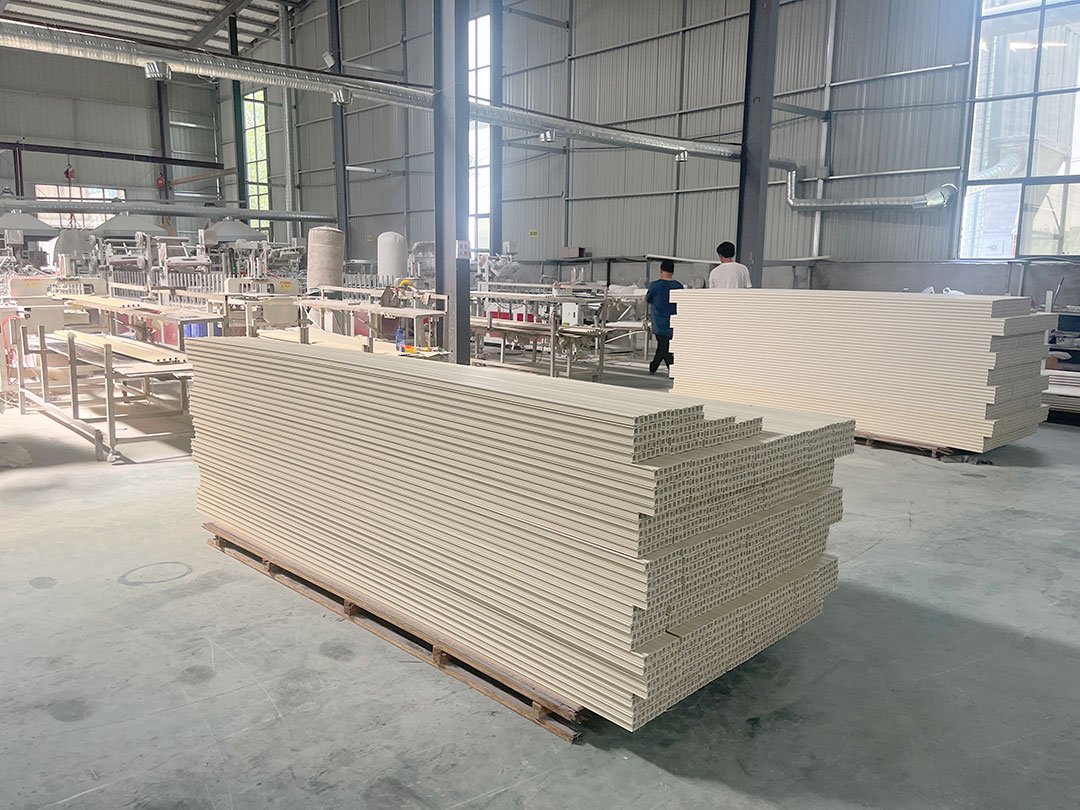
WPC Profile Film Lamination Process
The basic production process for decorative film lamination on WPC profiles can be described as:
WPC Extrusion → Cooling & Calibration → Surface Preparation → Heating/Adhesive Application → Decorative Film Lamination → Pressing & Bonding → Cooling → Cutting → Finished WPC Profile
1. WPC Core Extrusion
The production process starts by mixing thermoplastic polymers, wood flour or plant fibers, and relevant processing additives according to the product formulation.
The mixed material enters the extruder, where it is heated, plasticized, conveyed, and compressed before being continuously extruded through a customized die to form the required WPC profile.
2. Cooling and Calibration
The newly extruded WPC profile remains at a relatively high temperature and passes through cooling and calibration equipment.
This process helps control the profile’s dimensions, straightness, and cross-sectional shape, providing a stable substrate for the subsequent lamination process.
3. Surface Preparation
Before lamination, the WPC surface may undergo cleaning, sanding, brushing, or other surface preparation processes.
The main purpose is to remove dust and contaminants and improve the bonding conditions between the decorative film and WPC substrate.
4. Decorative Film Lamination
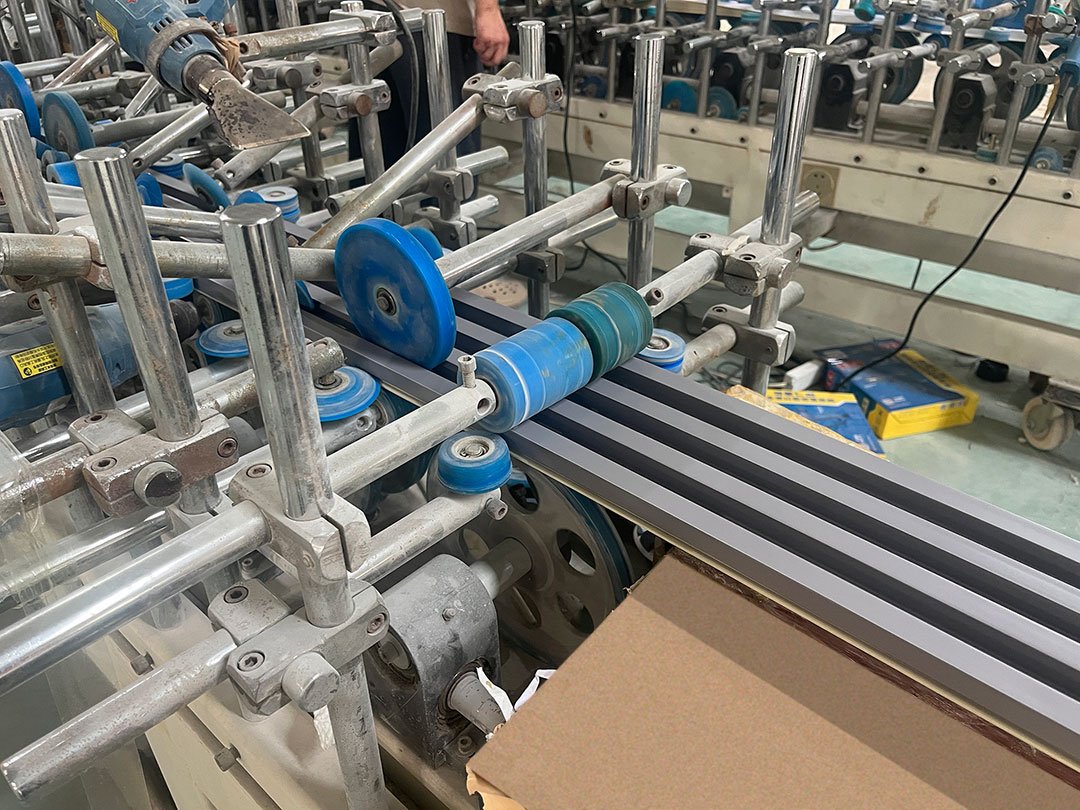
The prepared WPC profile enters the lamination equipment, where the decorative film is continuously laminated onto the profile surface.
Depending on the film material and equipment, heat, adhesive, pressure, or a combination of these methods can be used to create a stable bond between the decorative film and WPC substrate.
During production, parameters such as temperature, pressure, line speed, and film tension are normally controlled to maintain consistent lamination quality.
5. Cooling and Quality Inspection
After lamination, the profile is cooled and inspected.
The laminated surface is typically checked for defects such as:
- Wrinkles
- Bubbles
- Film delamination
- Film misalignment
- Surface scratches
- Uneven lamination
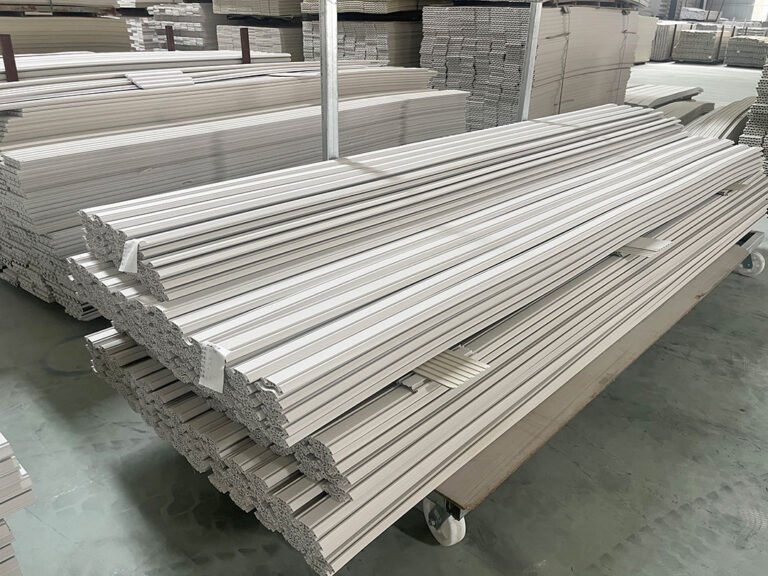
Qualified profiles can then be cut and packaged for subsequent use or shipment.
What Is the Difference Between the WPC Core and Decorative Film?
The WPC core and decorative film serve different functions in the finished product.
| Component | Main Function |
|---|---|
| WPC Core | Provides the profile’s shape, structure, and basic physical properties |
| Decorative Film | Provides color, patterns, textures, and surface appearance |
| Adhesive / Bonding Layer | Helps bond the decorative film to the WPC substrate |
| Protective Surface Layer | Provides additional surface protection depending on the film structure |
Conclusion
Decorative film lamination is a surface finishing process in which a decorative film is laminated onto an extruded WPC profile. The WPC core mainly provides the product’s shape and structure, while the decorative film provides color, patterns, textures, and surface appearance.
By combining custom extrusion dies + decorative film selection + controlled lamination processes, manufacturers can produce WPC profiles in different sizes, cross-sectional designs, colors, and surface finishes for WPC wall panel systems and other interior decorative applications.
This process also supports standard products as well as customized OEM/ODM WPC profile production.